
Lonicera maackii (Rupr.) Herder · Honeysuckle family (Caprifoliaceae) · Deciduous shrub from eastern Asia1
Invasive in Tennessee · TN-IPC: Established2 · Found in Anderson and Knox counties3
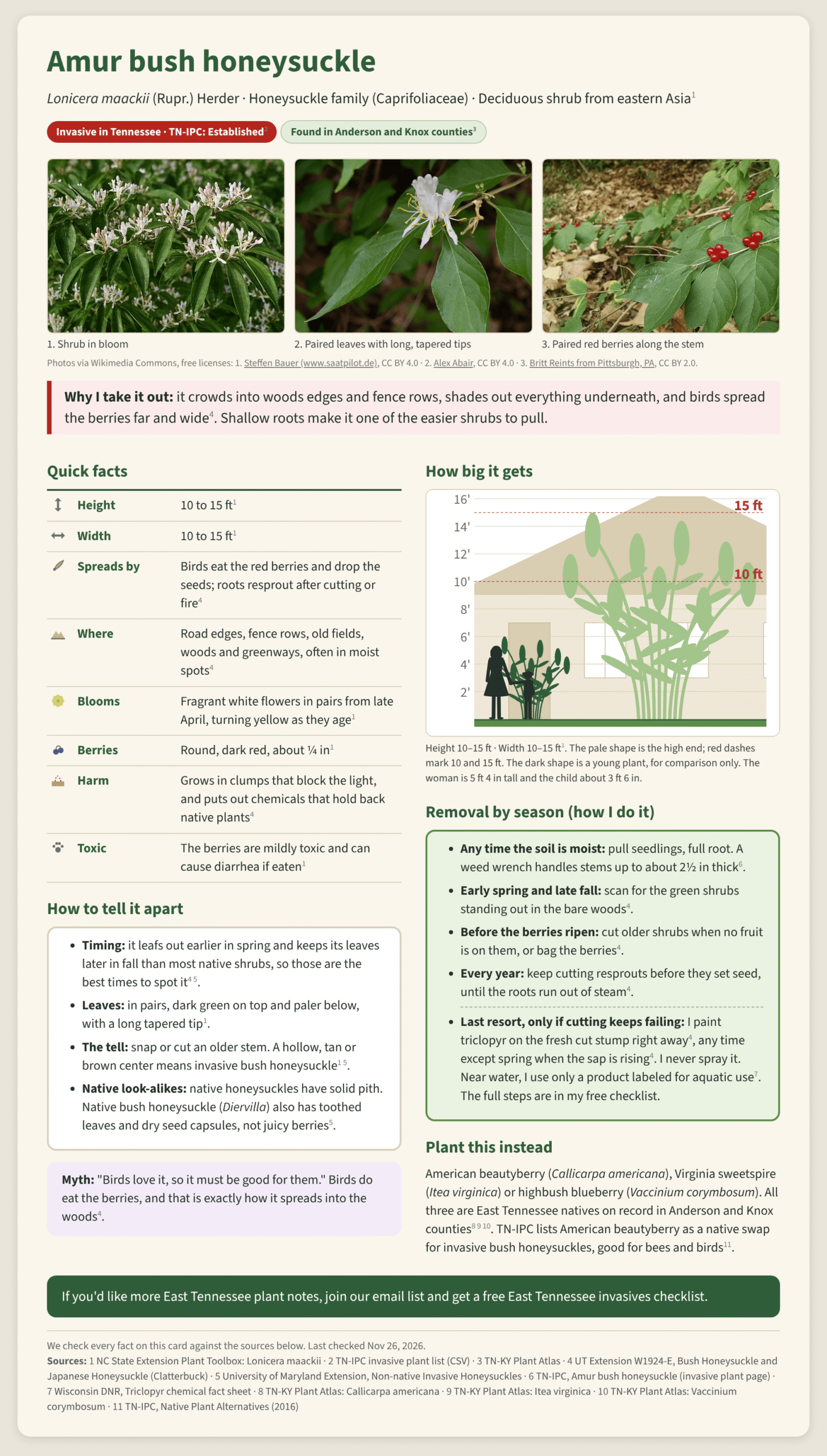
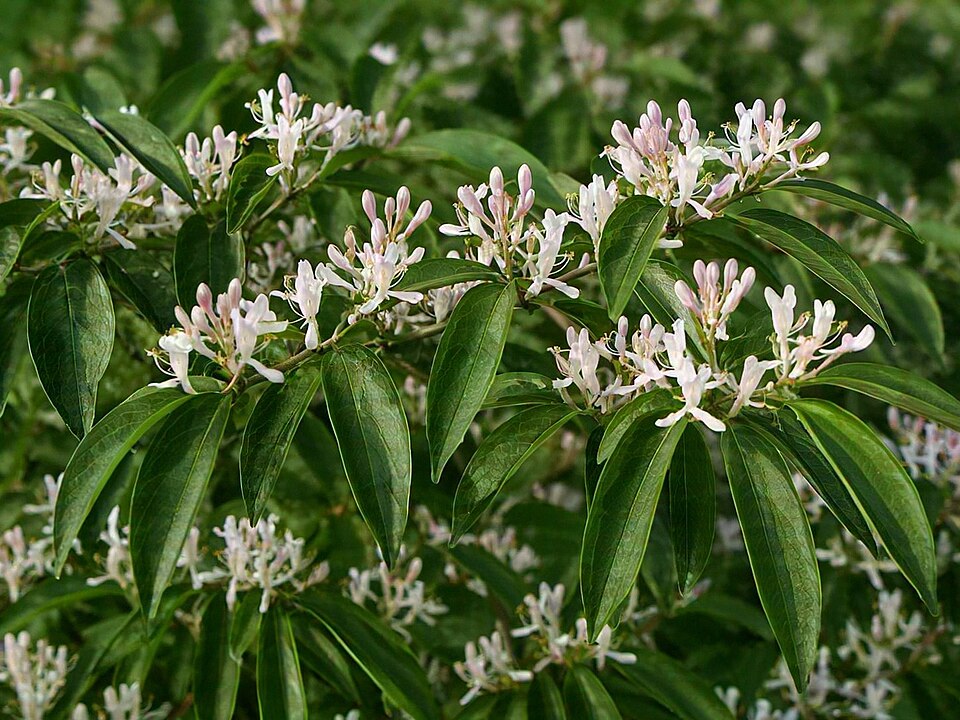

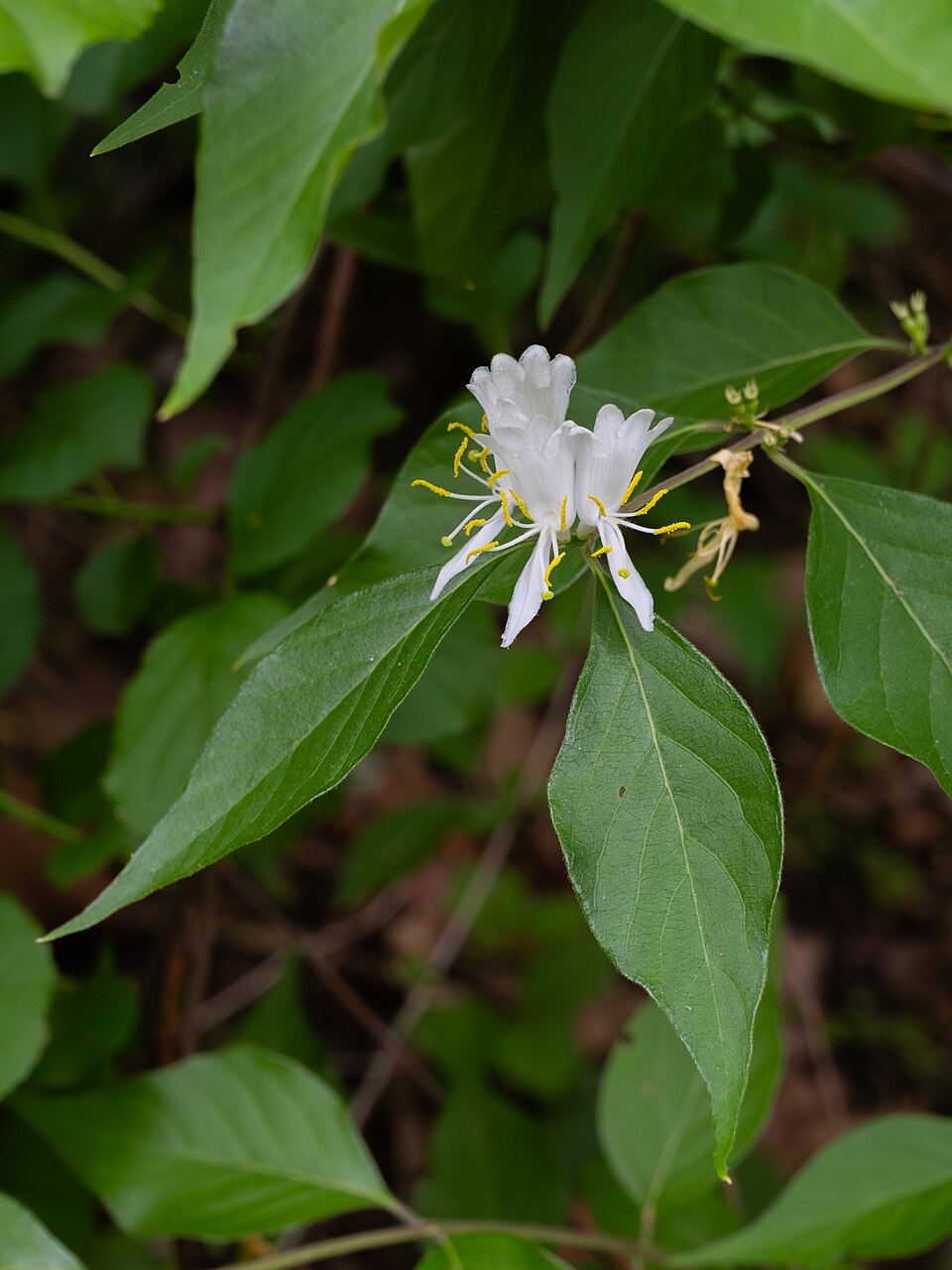

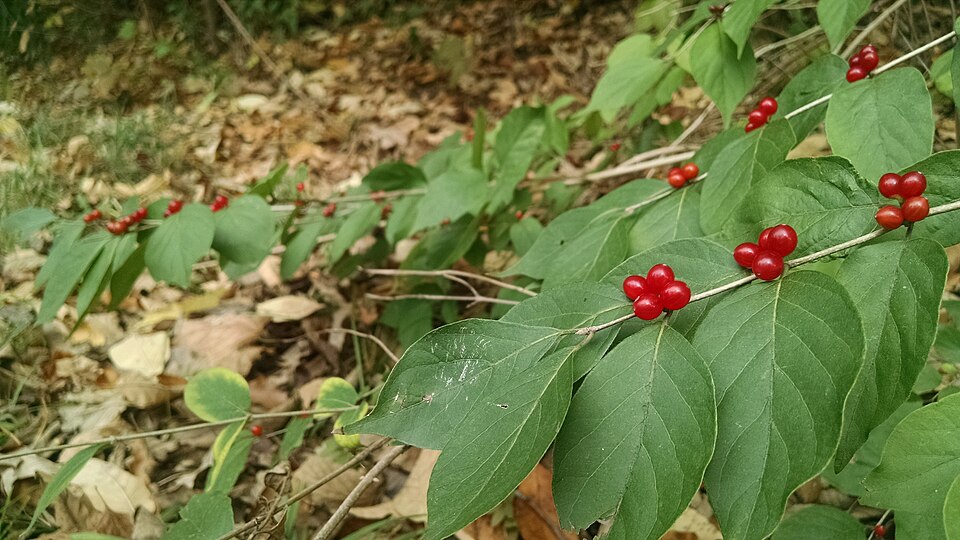

Why I take it out: it crowds into woods edges and fence rows, shades out everything underneath, and birds spread the berries far and wide4. Shallow roots make it one of the easier shrubs to pull.
Quick facts
- Height: 10 to 15 ft1
- Width: 10 to 15 ft1
- Spreads by: Birds eat the red berries and drop the seeds; roots resprout after cutting or fire4
- Where: Road edges, fence rows, old fields, woods and greenways, often in moist spots4
- Blooms: Fragrant white flowers in pairs from late April, turning yellow as they age1
- Berries: Round, dark red, about ¼ in1
- Harm: Grows in clumps that block the light, and puts out chemicals that hold back native plants4
- Toxic: The berries are mildly toxic and can cause diarrhea if eaten1
How to tell it apart
- Timing: it leafs out earlier in spring and keeps its leaves later in fall than most native shrubs, so those are the best times to spot it4 5.
- Leaves: in pairs, dark green on top and paler below, with a long tapered tip1.
- The tell: snap or cut an older stem. A hollow, tan or brown center means invasive bush honeysuckle1 5.
- Native look-alikes: native honeysuckles have solid pith. Native bush honeysuckle (Diervilla) also has toothed leaves and dry seed capsules, not juicy berries5.
How big it gets
Height 10–15 ft · Width 10–15 ft1. The pale shape is the high end; red dashes mark 10 and 15 ft. The dark shape is a young plant, for comparison only. The woman is 5 ft 4 in tall and the child about 3 ft 6 in.
Removal by season (how I do it)
- Any time the soil is moist: pull seedlings, full root. A weed wrench handles stems up to about 2½ in thick6.
- Early spring and late fall: scan for the green shrubs standing out in the bare woods4.
- Before the berries ripen: cut older shrubs when no fruit is on them, or bag the berries4.
- Every year: keep cutting resprouts before they set seed, until the roots run out of steam4.
- Last resort, only if cutting keeps failing: I paint triclopyr on the fresh cut stump right away4, any time except spring when the sap is rising4. I never spray it. Near water, I use only a product labeled for aquatic use7. The full steps are in my free checklist.
Plant this instead
American beautyberry (Callicarpa americana), Virginia sweetspire (Itea virginica) or highbush blueberry (Vaccinium corymbosum). All three are East Tennessee natives on record in Anderson and Knox counties8 9 10. TN-IPC lists American beautyberry as a native swap for invasive bush honeysuckles, good for bees and birds11.
Myth: “Birds love it, so it must be good for them.” Birds do eat the berries, and that is exactly how it spreads into the woods4.
If you’d like more East Tennessee plant notes, join our email list and get a free East Tennessee invasives checklist.
Sources
- NC State Extension Plant Toolbox: Lonicera maackii
- TN-IPC invasive plant list (CSV)
- TN-KY Plant Atlas
- UT Extension W1924-E, Bush Honeysuckle and Japanese Honeysuckle (Clatterbuck)
- University of Maryland Extension, Non-native Invasive Honeysuckles
- TN-IPC, Amur bush honeysuckle (invasive plant page)
- Wisconsin DNR, Triclopyr chemical fact sheet
- TN-KY Plant Atlas: Callicarpa americana
- TN-KY Plant Atlas: Itea virginica
- TN-KY Plant Atlas: Vaccinium corymbosum
- TN-IPC, Native Plant Alternatives (2016)
Last checked Nov 26, 2026.