
Elaeagnus umbellata Thunb. · Oleaster family (Elaeagnaceae) · Deciduous shrub from Asia1 2
Invasive in Tennessee · TN-IPC: Established3 · Found in Anderson, Knox and Roane counties4
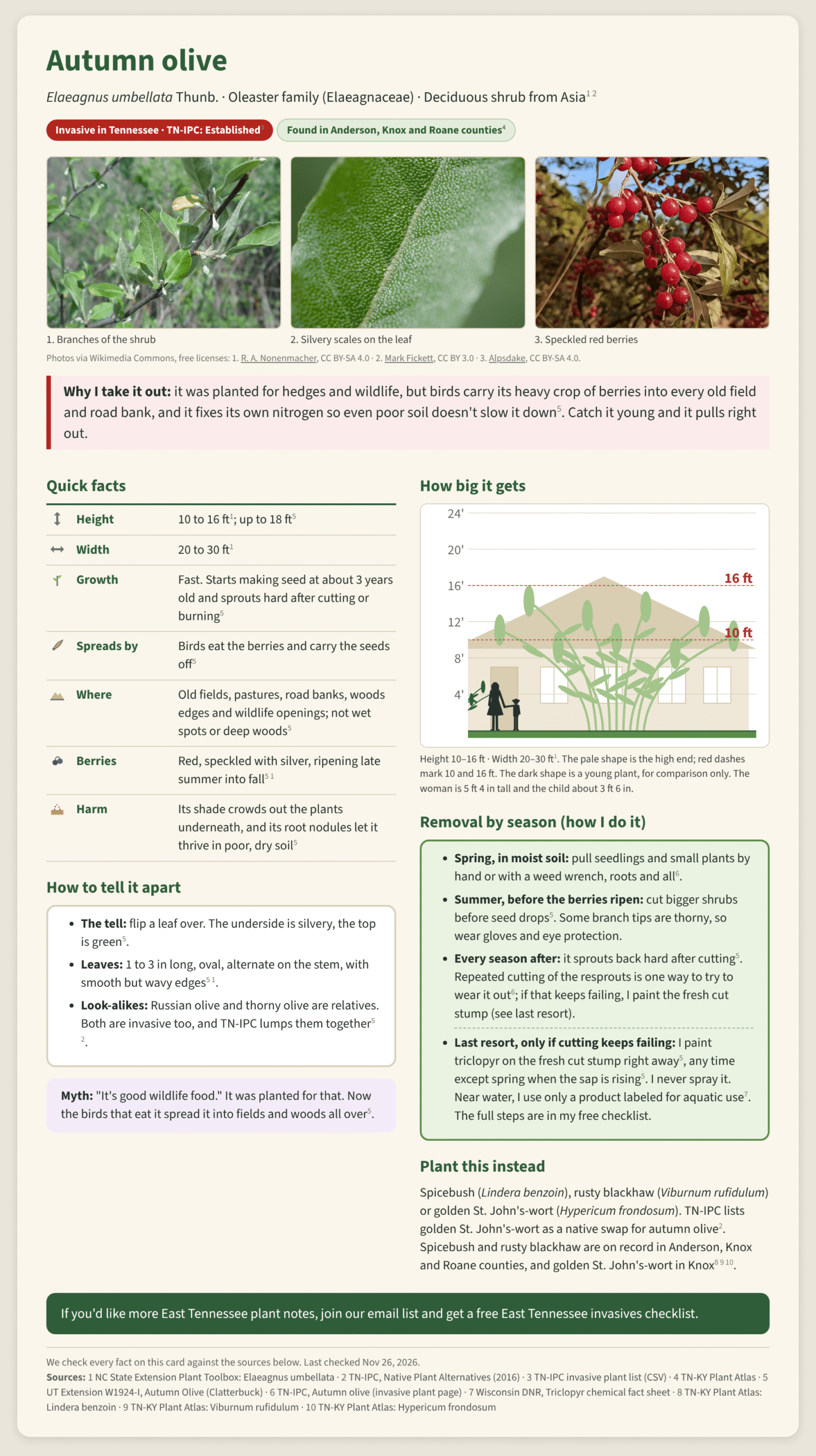
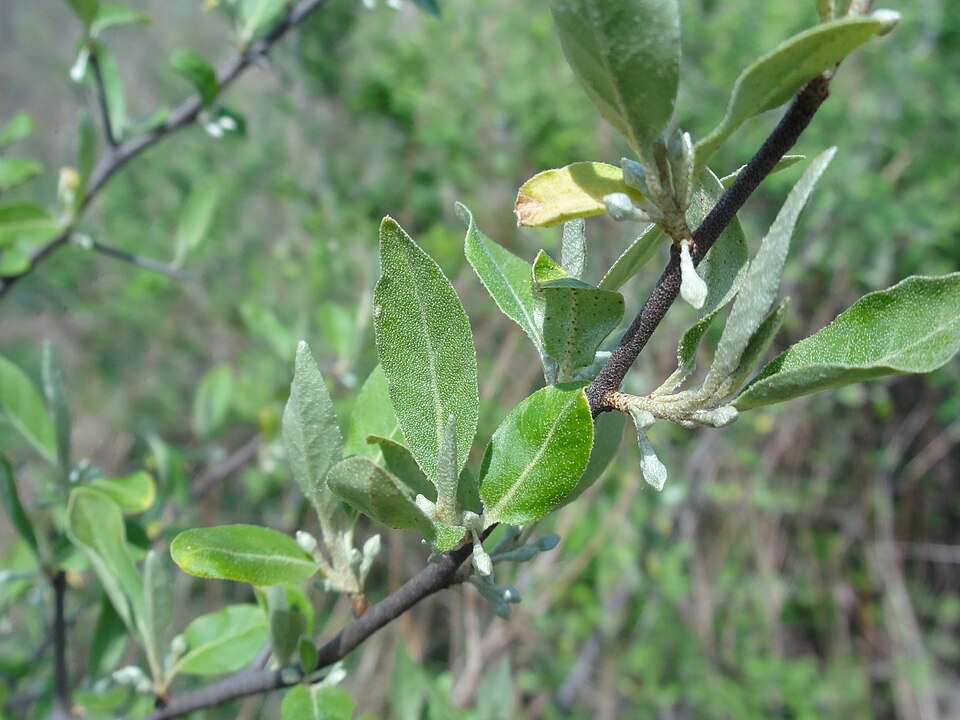

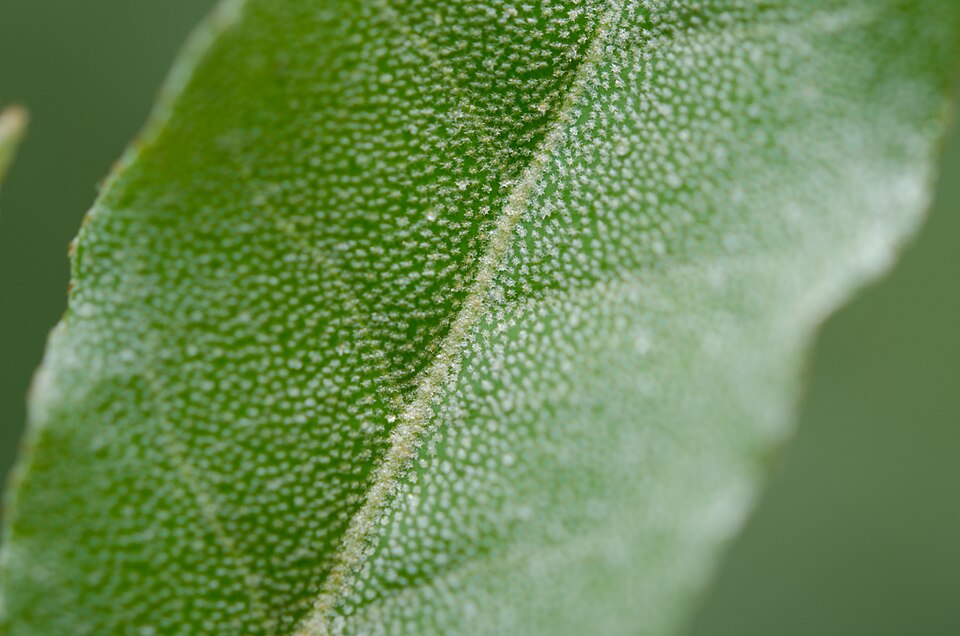

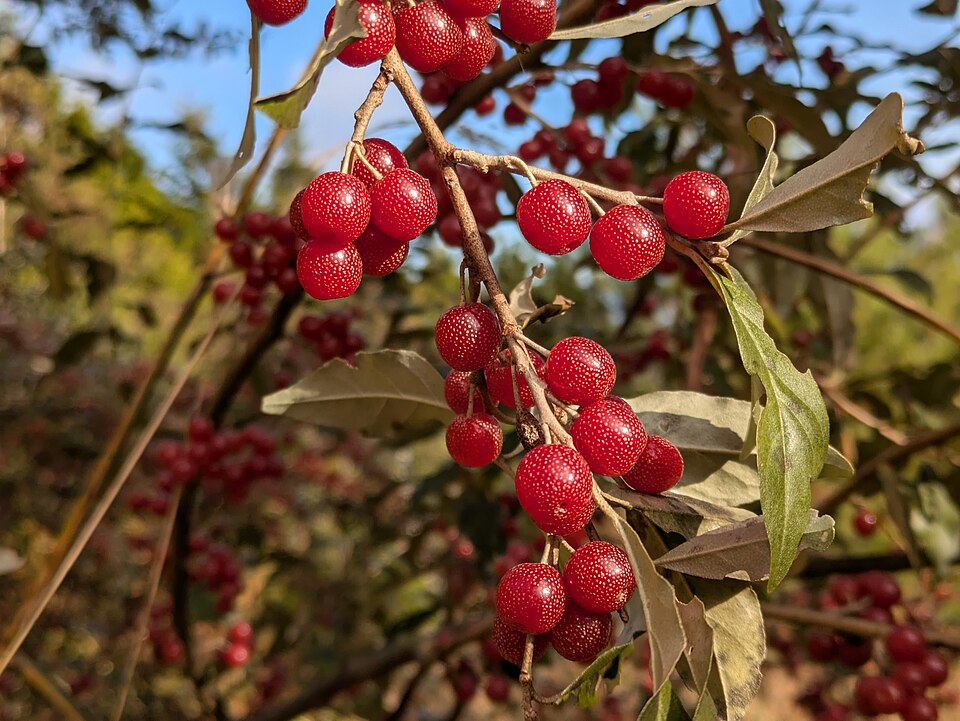

Why I take it out: it was planted for hedges and wildlife, but birds carry its heavy crop of berries into every old field and road bank, and it fixes its own nitrogen so even poor soil doesn’t slow it down5. Catch it young and it pulls right out.
Quick facts
- Height: 10 to 16 ft1; up to 18 ft5
- Width: 20 to 30 ft1
- Growth: Fast. Starts making seed at about 3 years old and sprouts hard after cutting or burning5
- Spreads by: Birds eat the berries and carry the seeds off5
- Where: Old fields, pastures, road banks, woods edges and wildlife openings; not wet spots or deep woods5
- Berries: Red, speckled with silver, ripening late summer into fall5 1
- Harm: Its shade crowds out the plants underneath, and its root nodules let it thrive in poor, dry soil5
How to tell it apart
- The tell: flip a leaf over. The underside is silvery, the top is green5.
- Leaves: 1 to 3 in long, oval, alternate on the stem, with smooth but wavy edges5 1.
- Look-alikes: Russian olive and thorny olive are relatives. Both are invasive too, and TN-IPC lumps them together5 2.
How big it gets
Height 10–16 ft · Width 20–30 ft1. The pale shape is the high end; red dashes mark 10 and 16 ft. The dark shape is a young plant, for comparison only. The woman is 5 ft 4 in tall and the child about 3 ft 6 in.
Removal by season (how I do it)
- Spring, in moist soil: pull seedlings and small plants by hand or with a weed wrench, roots and all6.
- Summer, before the berries ripen: cut bigger shrubs before seed drops5. Some branch tips are thorny, so wear gloves and eye protection.
- Every season after: it sprouts back hard after cutting5. Repeated cutting of the resprouts is one way to try to wear it out6; if that keeps failing, I paint the fresh cut stump (see last resort).
- Last resort, only if cutting keeps failing: I paint triclopyr on the fresh cut stump right away5, any time except spring when the sap is rising5. I never spray it. Near water, I use only a product labeled for aquatic use7. The full steps are in my free checklist.
Plant this instead
Spicebush (Lindera benzoin), rusty blackhaw (Viburnum rufidulum) or golden St. John’s-wort (Hypericum frondosum). TN-IPC lists golden St. John’s-wort as a native swap for autumn olive2. Spicebush and rusty blackhaw are on record in Anderson, Knox and Roane counties, and golden St. John’s-wort in Knox8 9 10.
Myth: “It’s good wildlife food.” It was planted for that. Now the birds that eat it spread it into fields and woods all over5.
If you’d like more East Tennessee plant notes, join our email list and get a free East Tennessee invasives checklist.
Sources
- NC State Extension Plant Toolbox: Elaeagnus umbellata
- TN-IPC, Native Plant Alternatives (2016)
- TN-IPC invasive plant list (CSV)
- TN-KY Plant Atlas
- UT Extension W1924-I, Autumn Olive (Clatterbuck)
- TN-IPC, Autumn olive (invasive plant page)
- Wisconsin DNR, Triclopyr chemical fact sheet
- TN-KY Plant Atlas: Lindera benzoin
- TN-KY Plant Atlas: Viburnum rufidulum
- TN-KY Plant Atlas: Hypericum frondosum
Last checked Nov 26, 2026.