
Cirsium arvense (L.) Scop. · Aster family (Asteraceae) · Perennial herb from Eurasia1
Not on the TN-IPC list, but aggressive here2 · Found in Knox County3
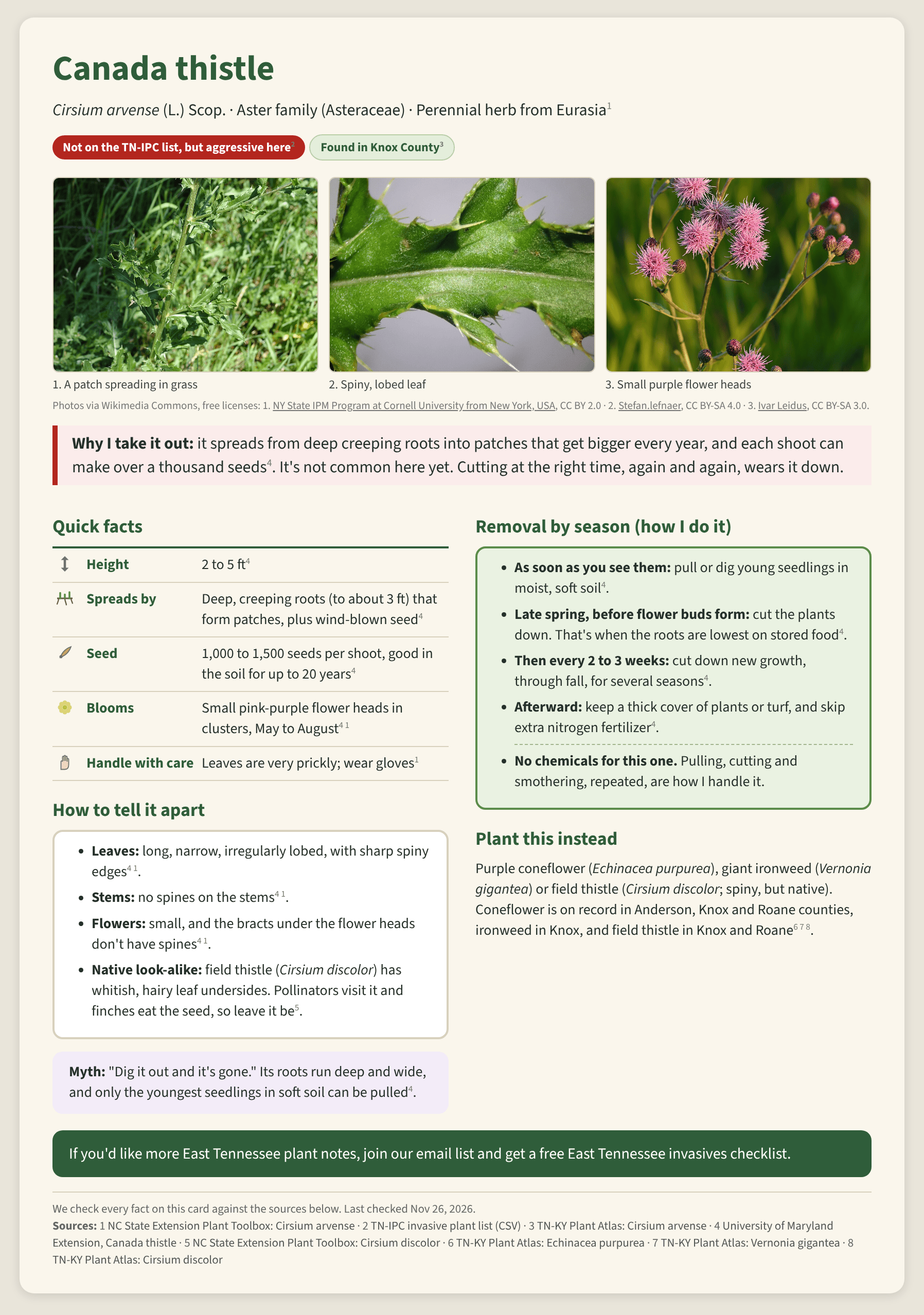
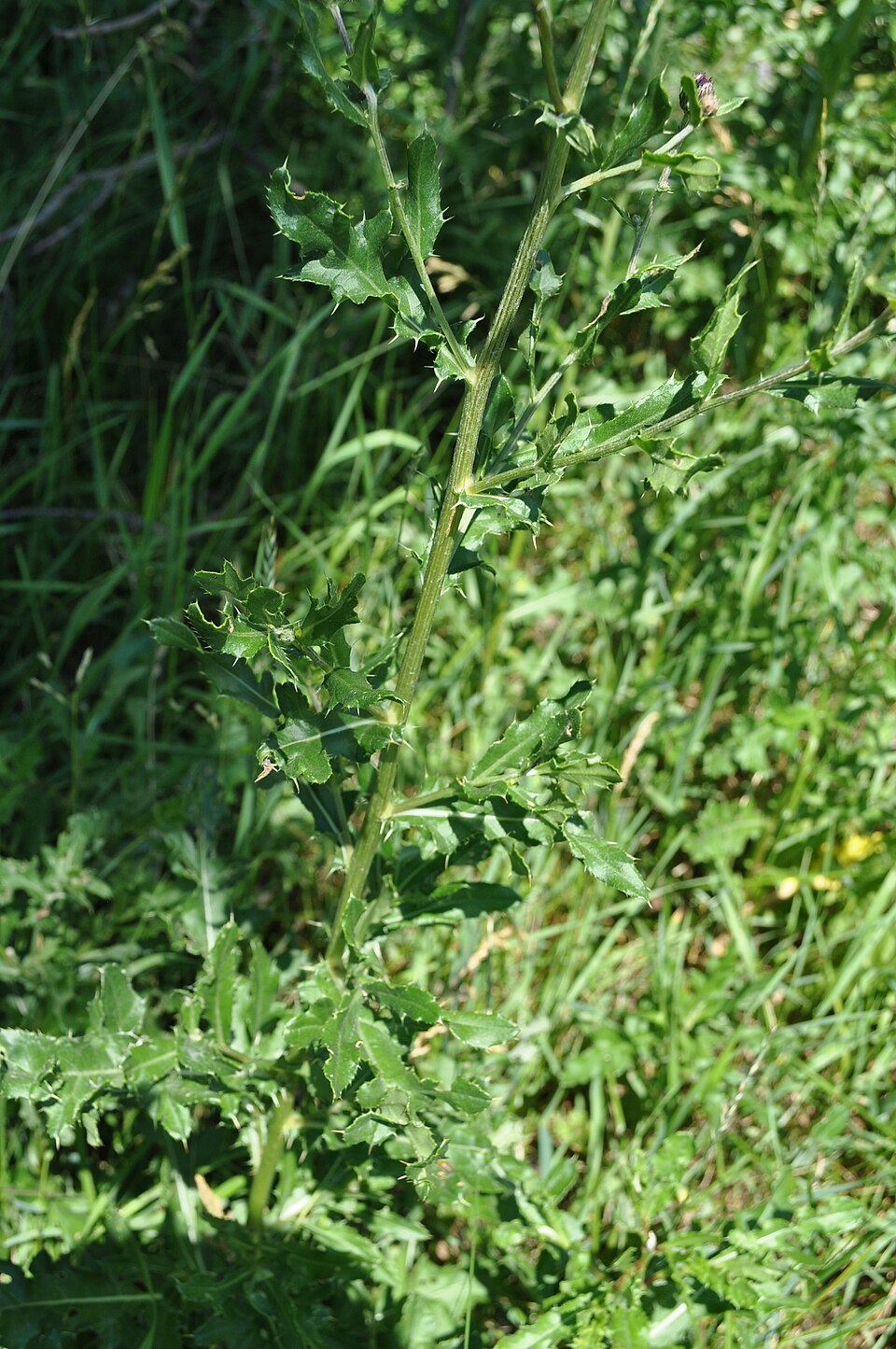

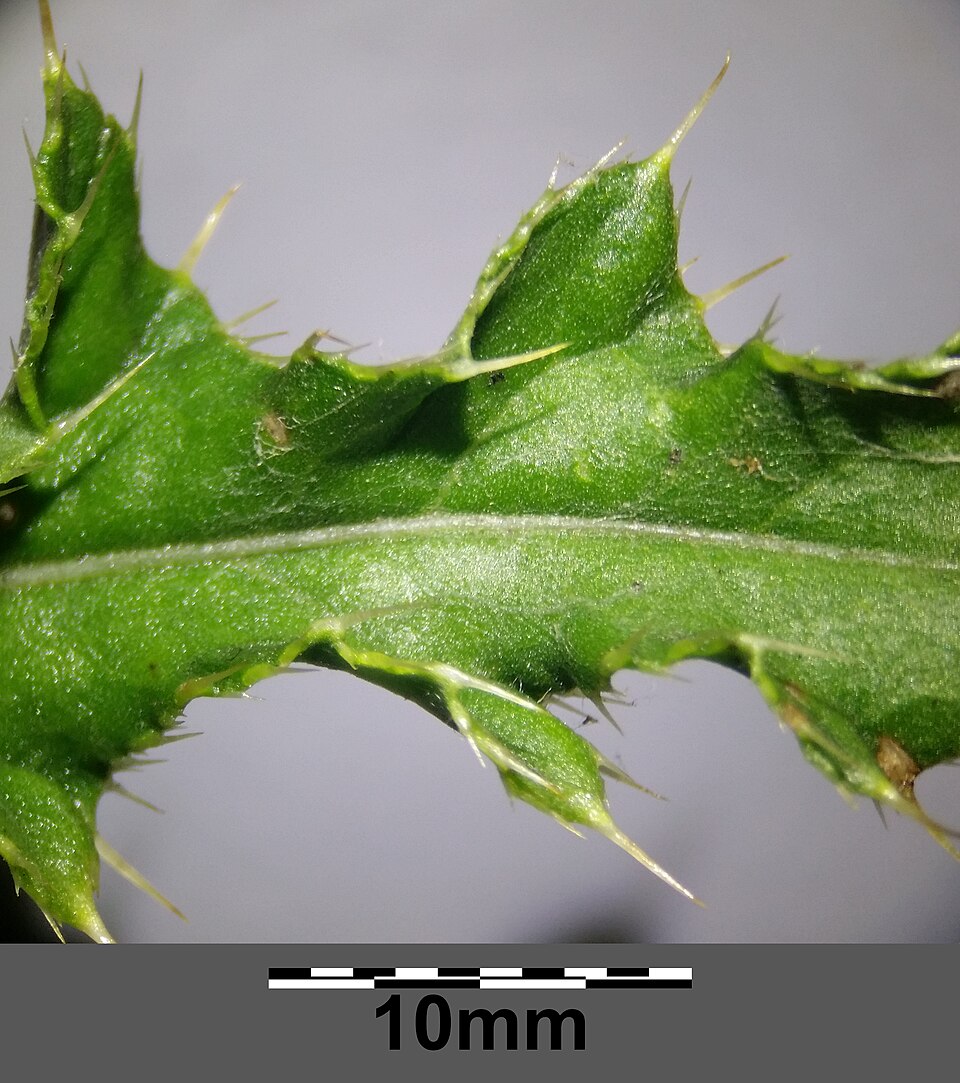

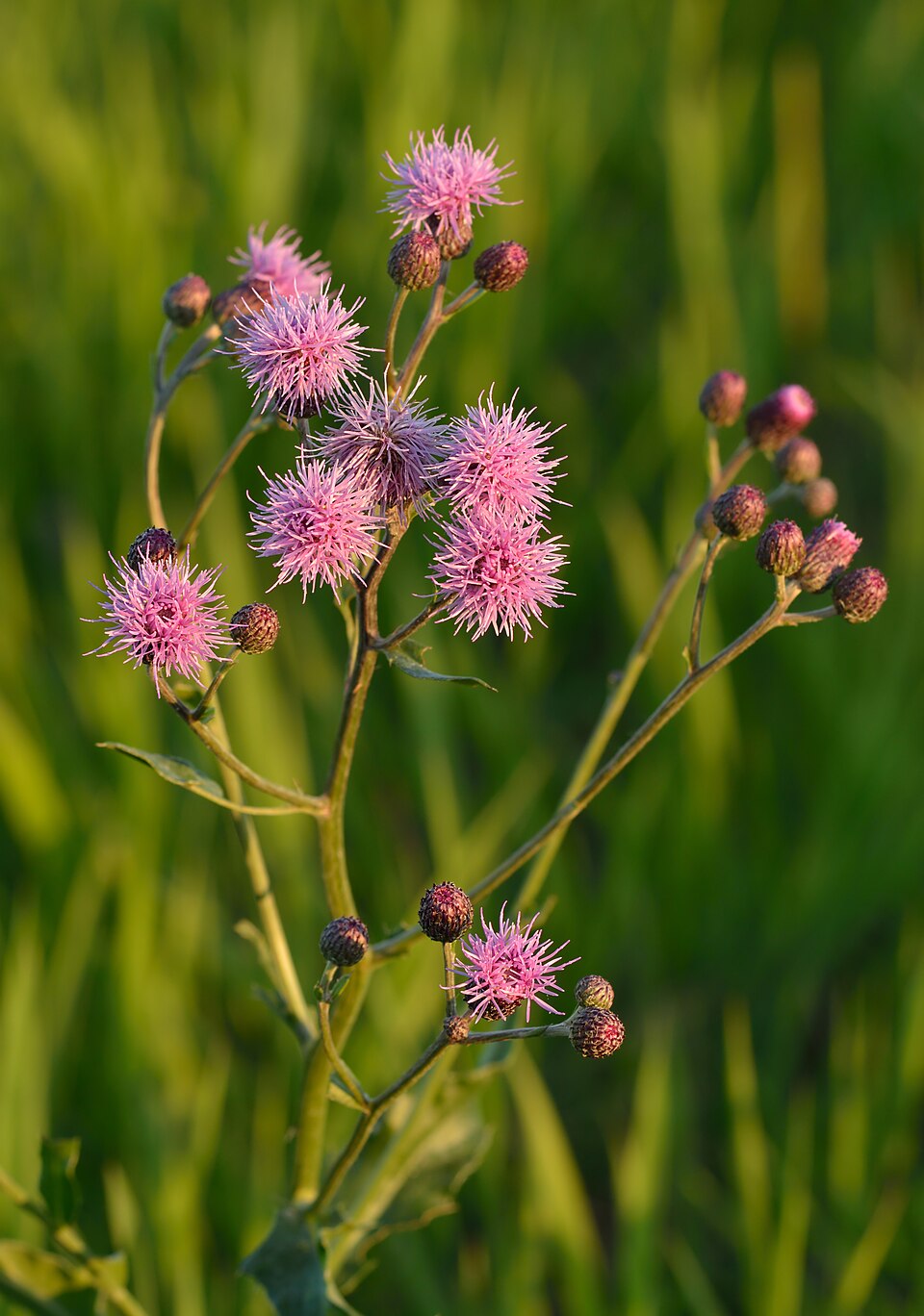

Why I take it out: it spreads from deep creeping roots into patches that get bigger every year, and each shoot can make over a thousand seeds4. It’s not common here yet. Cutting at the right time, again and again, wears it down.
Quick facts
- Height: 2 to 5 ft4
- Spreads by: Deep, creeping roots (to about 3 ft) that form patches, plus wind-blown seed4
- Seed: 1,000 to 1,500 seeds per shoot, good in the soil for up to 20 years4
- Blooms: Small pink-purple flower heads in clusters, May to August4 1
- Handle with care: Leaves are very prickly; wear gloves1
How to tell it apart
- Leaves: long, narrow, irregularly lobed, with sharp spiny edges4 1.
- Stems: no spines on the stems4 1.
- Flowers: small, and the bracts under the flower heads don’t have spines4 1.
- Native look-alike: field thistle (Cirsium discolor) has whitish, hairy leaf undersides. Pollinators visit it and finches eat the seed, so leave it be5.
Removal by season (how I do it)
- As soon as you see them: pull or dig young seedlings in moist, soft soil4.
- Late spring, before flower buds form: cut the plants down. That’s when the roots are lowest on stored food4.
- Then every 2 to 3 weeks: cut down new growth, through fall, for several seasons4.
- Afterward: keep a thick cover of plants or turf, and skip extra nitrogen fertilizer4.
- No chemicals for this one. Pulling, cutting and smothering, repeated, are how I handle it.
Plant this instead
Purple coneflower (Echinacea purpurea), giant ironweed (Vernonia gigantea) or field thistle (Cirsium discolor; spiny, but native). Coneflower is on record in Anderson, Knox and Roane counties, ironweed in Knox, and field thistle in Knox and Roane6 7 8.
Myth: “Dig it out and it’s gone.” Its roots run deep and wide, and only the youngest seedlings in soft soil can be pulled4.
If you’d like more East Tennessee plant notes, join our email list and get a free East Tennessee invasives checklist.
Sources
- NC State Extension Plant Toolbox: Cirsium arvense
- TN-IPC invasive plant list (CSV)
- TN-KY Plant Atlas: Cirsium arvense
- University of Maryland Extension, Canada thistle
- NC State Extension Plant Toolbox: Cirsium discolor
- TN-KY Plant Atlas: Echinacea purpurea
- TN-KY Plant Atlas: Vernonia gigantea
- TN-KY Plant Atlas: Cirsium discolor
Last checked Nov 26, 2026.