
Alliaria petiolata (M. Bieb.) Cavara & Grande · Mustard family (Brassicaceae) · Biennial herb from Europe and Asia1 2
Invasive in Tennessee · TN-IPC: Established3 · Found in Anderson and Knox counties4
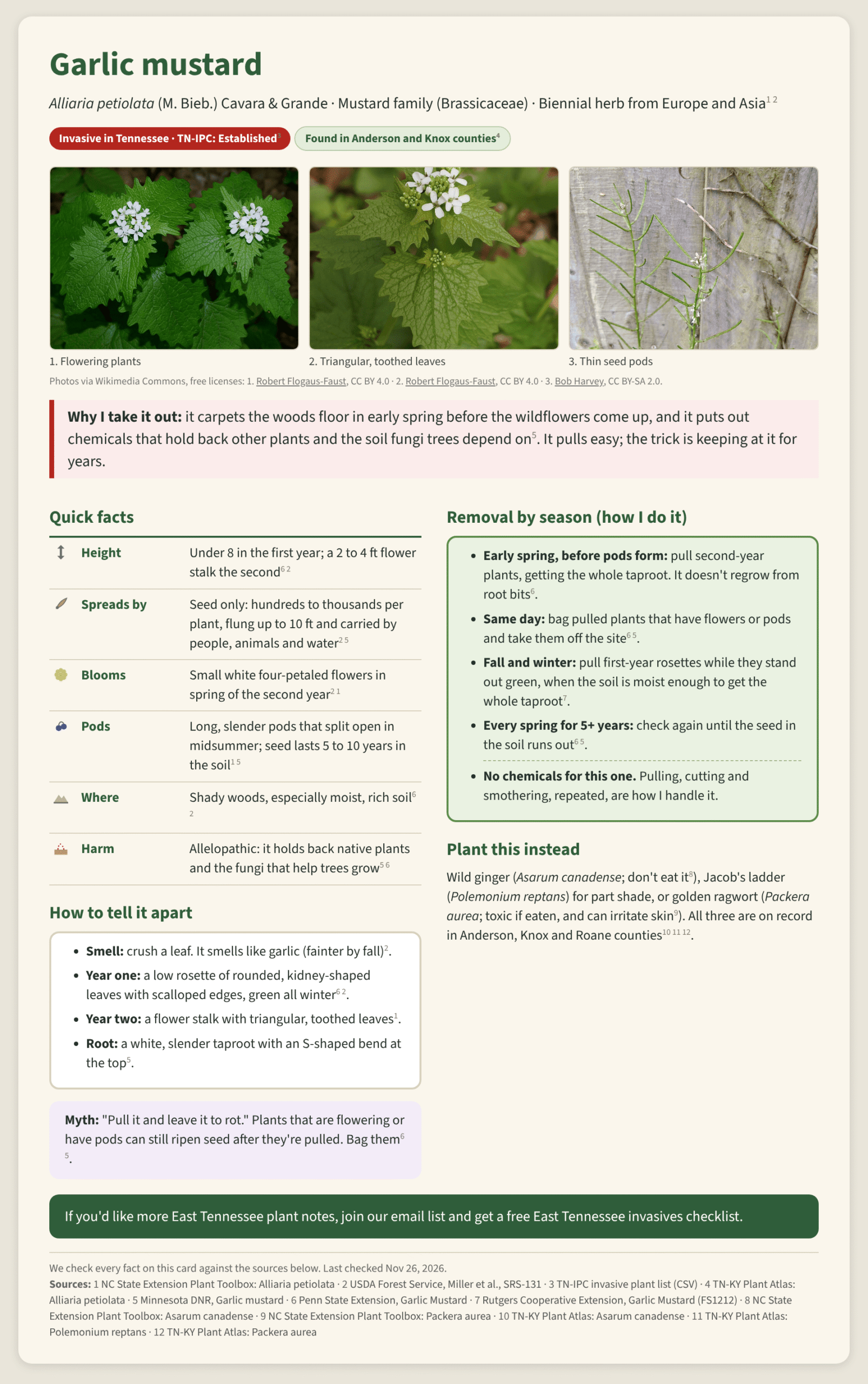



Why I take it out: it carpets the woods floor in early spring before the wildflowers come up, and it puts out chemicals that hold back other plants and the soil fungi trees depend on5. It pulls easy; the trick is keeping at it for years.
Quick facts
- Height: Under 8 in the first year; a 2 to 4 ft flower stalk the second6 2
- Spreads by: Seed only: hundreds to thousands per plant, flung up to 10 ft and carried by people, animals and water2 5
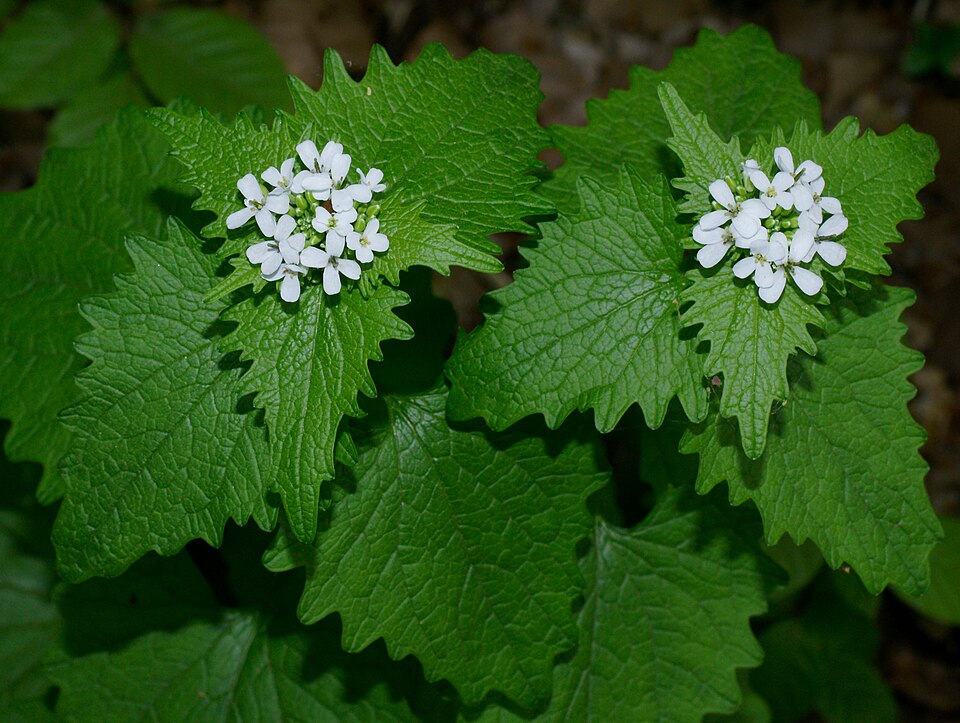
- Blooms: Small white four-petaled flowers in spring of the second year2 1
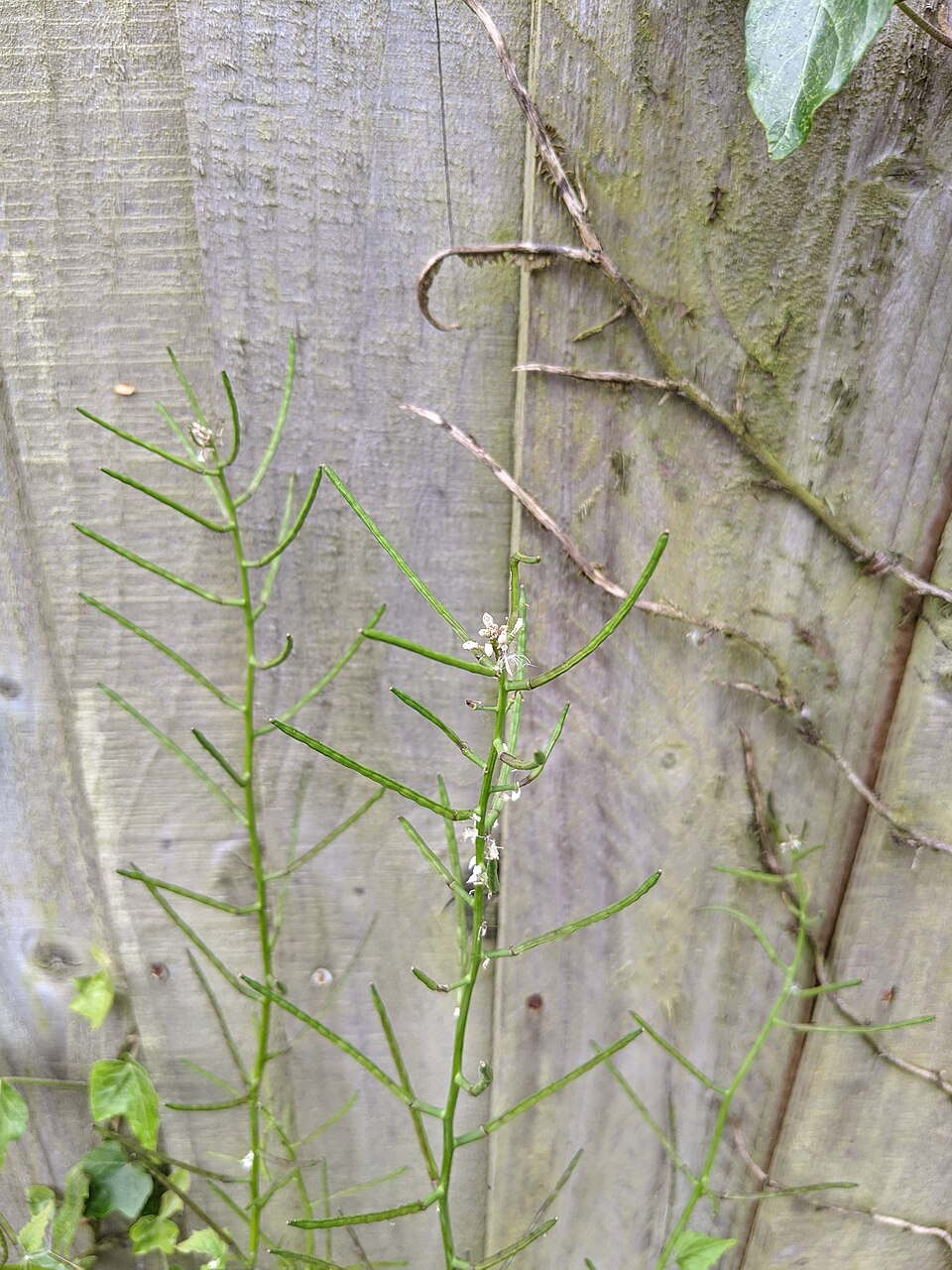
- Pods: Long, slender pods that split open in midsummer; seed lasts 5 to 10 years in the soil1 5
- Where: Shady woods, especially moist, rich soil6 2
- Harm: Allelopathic: it holds back native plants and the fungi that help trees grow5 6
How to tell it apart
- Smell: crush a leaf. It smells like garlic (fainter by fall)2.
- Year one: a low rosette of rounded, kidney-shaped leaves with scalloped edges, green all winter6 2.
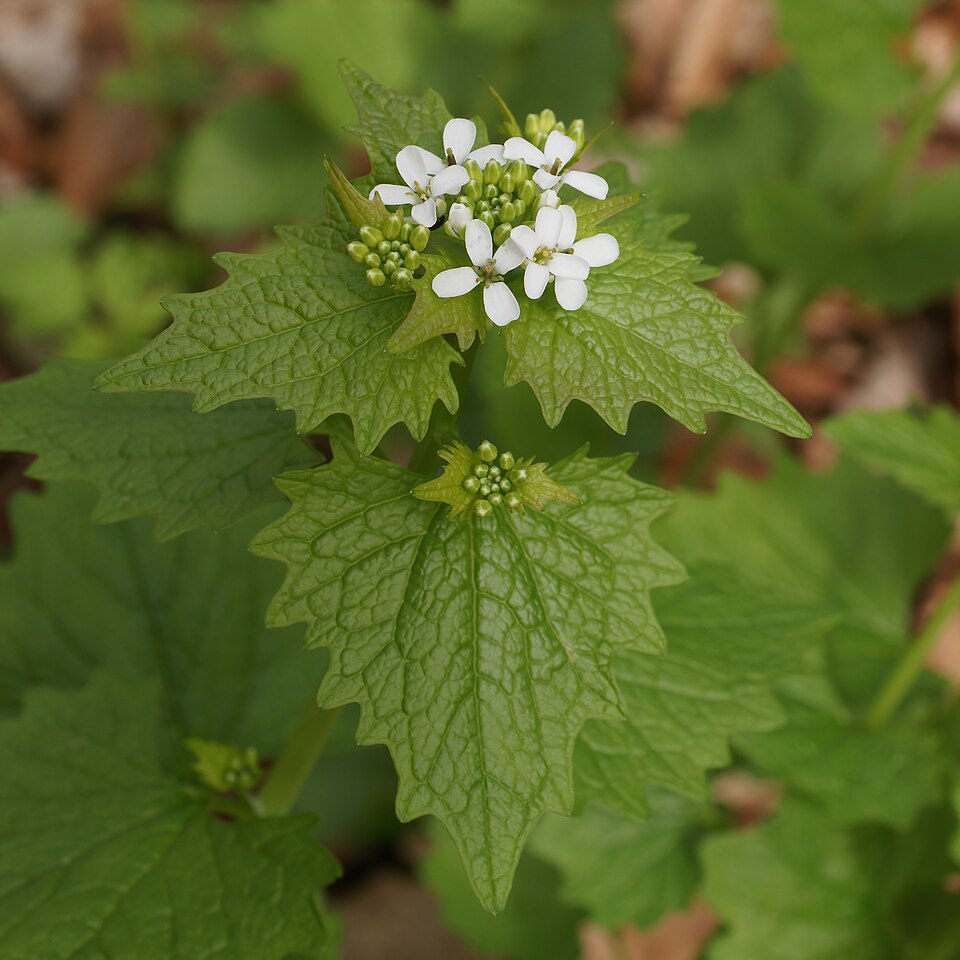
- Year two: a flower stalk with triangular, toothed leaves1.
- Root: a white, slender taproot with an S-shaped bend at the top5.
Removal by season (how I do it)
- Early spring, before pods form: pull second-year plants, getting the whole taproot. It doesn’t regrow from root bits6.
- Same day: bag pulled plants that have flowers or pods and take them off the site6 5.
- Fall and winter: pull first-year rosettes while they stand out green, when the soil is moist enough to get the whole taproot7.
- Every spring for 5+ years: check again until the seed in the soil runs out6 5.
- No chemicals for this one. Pulling, cutting and smothering, repeated, are how I handle it.
Plant this instead
Wild ginger (Asarum canadense; don’t eat it8), Jacob’s ladder (Polemonium reptans) for part shade, or golden ragwort (Packera aurea; toxic if eaten, and can irritate skin9). All three are on record in Anderson, Knox and Roane counties10 11 12.
Myth: “Pull it and leave it to rot.” Plants that are flowering or have pods can still ripen seed after they’re pulled. Bag them6 5.
If you’d like more East Tennessee plant notes, join our email list and get a free East Tennessee invasives checklist.
Sources
- NC State Extension Plant Toolbox: Alliaria petiolata
- USDA Forest Service, Miller et al., SRS-131
- TN-IPC invasive plant list (CSV)
- TN-KY Plant Atlas: Alliaria petiolata
- Minnesota DNR, Garlic mustard
- Penn State Extension, Garlic Mustard
- Rutgers Cooperative Extension, Garlic Mustard (FS1212)
- NC State Extension Plant Toolbox: Asarum canadense
- NC State Extension Plant Toolbox: Packera aurea
- TN-KY Plant Atlas: Asarum canadense
- TN-KY Plant Atlas: Polemonium reptans
- TN-KY Plant Atlas: Packera aurea
Last checked Nov 26, 2026.