
Reynoutria japonica Houtt. (formerly Fallopia japonica) · Buckwheat family (Polygonaceae) · Perennial herb from eastern Asia1
Invasive in Tennessee · TN-IPC: Established2 · Found in Knox County3
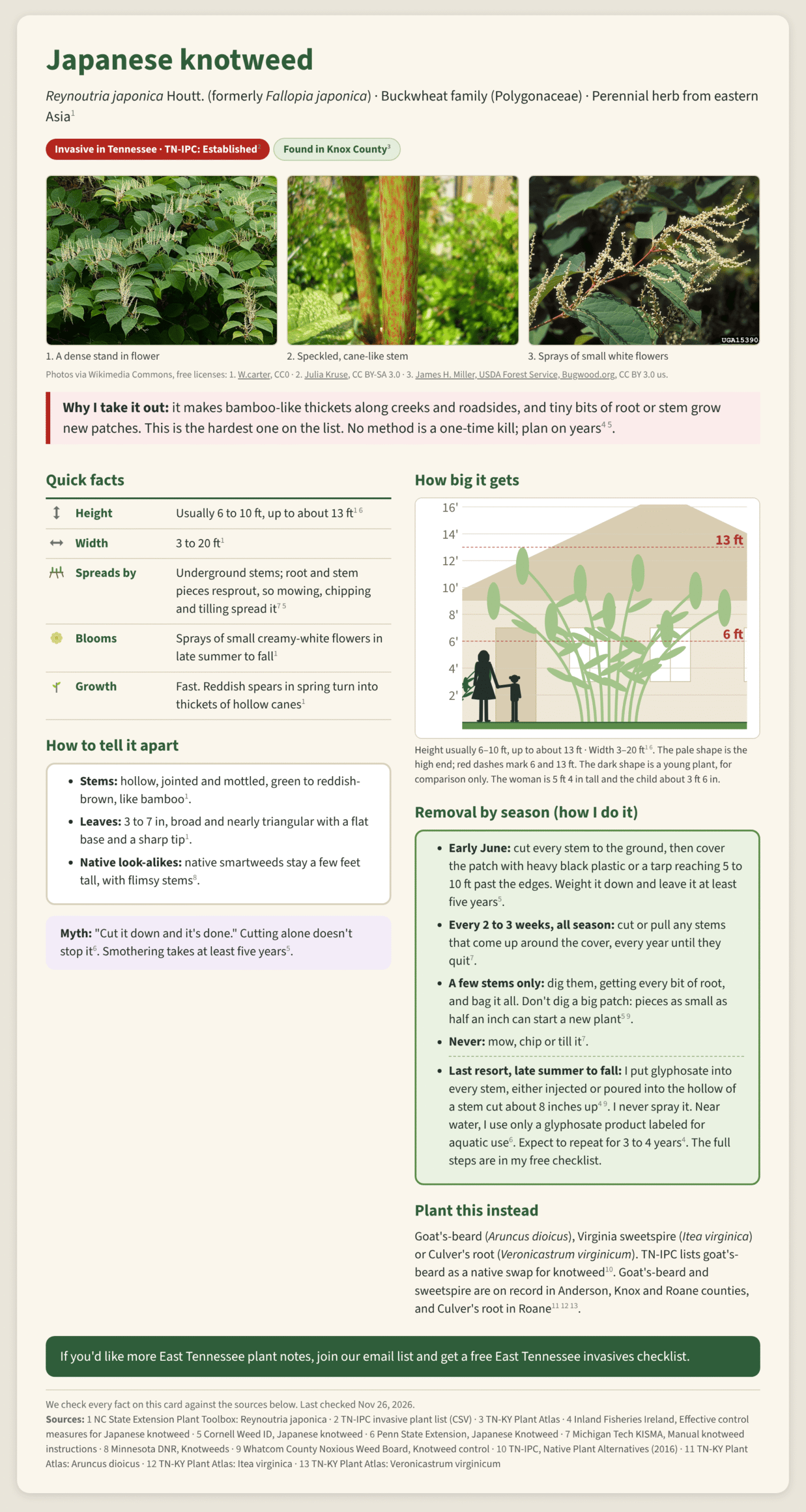
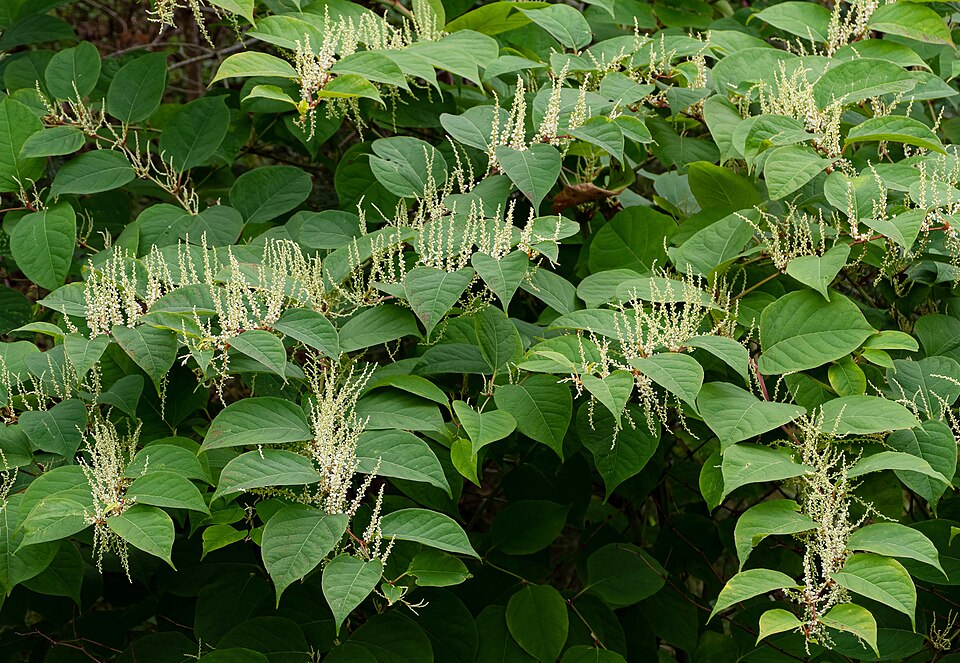

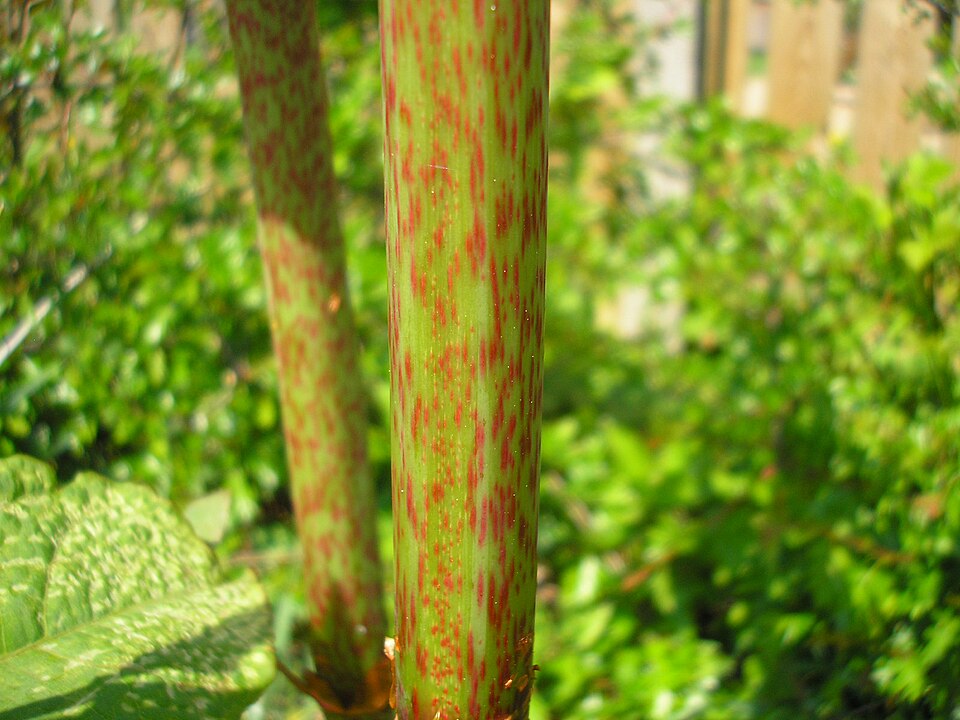

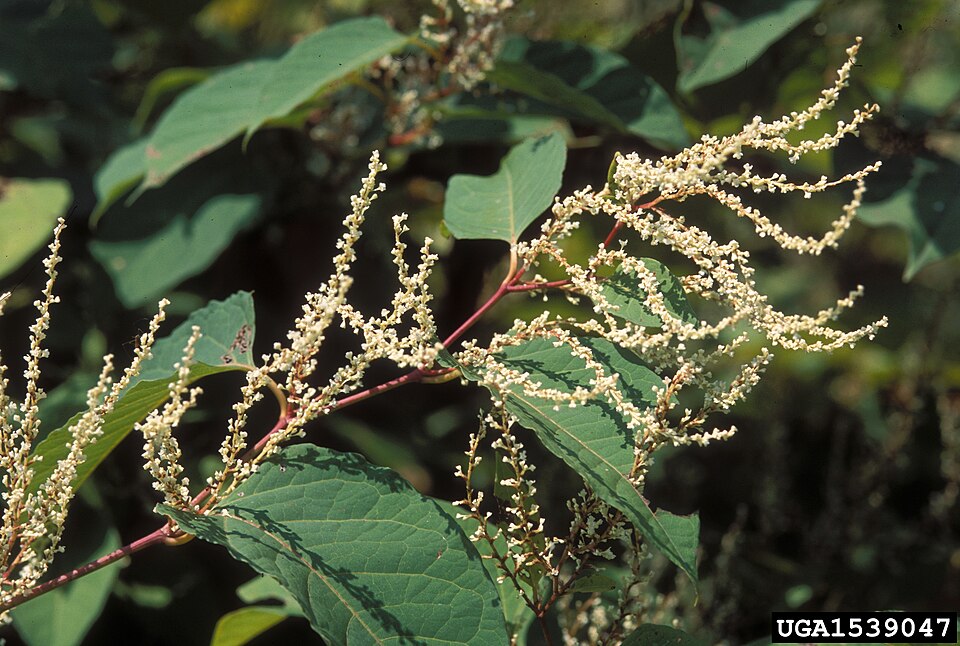

Why I take it out: it makes bamboo-like thickets along creeks and roadsides, and tiny bits of root or stem grow new patches. This is the hardest one on the list. No method is a one-time kill; plan on years4 5.
Quick facts
- Height: Usually 6 to 10 ft, up to about 13 ft1 6
- Width: 3 to 20 ft1
- Spreads by: Underground stems; root and stem pieces resprout, so mowing, chipping and tilling spread it7 5
- Blooms: Sprays of small creamy-white flowers in late summer to fall1
- Growth: Fast. Reddish spears in spring turn into thickets of hollow canes1
How to tell it apart
- Stems: hollow, jointed and mottled, green to reddish-brown, like bamboo1.
- Leaves: 3 to 7 in, broad and nearly triangular with a flat base and a sharp tip1.
- Native look-alikes: native smartweeds stay a few feet tall, with flimsy stems8.
How big it gets
Height usually 6–10 ft, up to about 13 ft · Width 3–20 ft1 6. The pale shape is the high end; red dashes mark 6 and 13 ft. The dark shape is a young plant, for comparison only. The woman is 5 ft 4 in tall and the child about 3 ft 6 in.
Removal by season (how I do it)
- Early June: cut every stem to the ground, then cover the patch with heavy black plastic or a tarp reaching 5 to 10 ft past the edges. Weight it down and leave it at least five years5.
- Every 2 to 3 weeks, all season: cut or pull any stems that come up around the cover, every year until they quit7.
- A few stems only: dig them, getting every bit of root, and bag it all. Don’t dig a big patch: pieces as small as half an inch can start a new plant5 9.
- Never: mow, chip or till it7.
- Last resort, late summer to fall: I put glyphosate into every stem, either injected or poured into the hollow of a stem cut about 8 inches up4 9. I never spray it. Near water, I use only a glyphosate product labeled for aquatic use6. Expect to repeat for 3 to 4 years4. The full steps are in my free checklist.
Plant this instead
Goat’s-beard (Aruncus dioicus), Virginia sweetspire (Itea virginica) or Culver’s root (Veronicastrum virginicum). TN-IPC lists goat’s-beard as a native swap for knotweed10. Goat’s-beard and sweetspire are on record in Anderson, Knox and Roane counties, and Culver’s root in Roane11 12 13.
Myth: “Cut it down and it’s done.” Cutting alone doesn’t stop it6. Smothering takes at least five years5.
If you’d like more East Tennessee plant notes, join our email list and get a free East Tennessee invasives checklist.
Sources
- NC State Extension Plant Toolbox: Reynoutria japonica
- TN-IPC invasive plant list (CSV)
- TN-KY Plant Atlas
- Inland Fisheries Ireland, Effective control measures for Japanese knotweed
- Cornell Weed ID, Japanese knotweed
- Penn State Extension, Japanese Knotweed
- Michigan Tech KISMA, Manual knotweed instructions
- Minnesota DNR, Knotweeds
- Whatcom County Noxious Weed Board, Knotweed control
- TN-IPC, Native Plant Alternatives (2016)
- TN-KY Plant Atlas: Aruncus dioicus
- TN-KY Plant Atlas: Itea virginica
- TN-KY Plant Atlas: Veronicastrum virginicum
Last checked Nov 26, 2026.