
Artemisia vulgaris L. · Aster family (Asteraceae) · Perennial herb from Eurasia1
Not on the TN-IPC list, but aggressive here2 · Found in Knox and Roane counties3



Why I take it out: it spreads by underground stems into thick colonies, and every bit of root you break off makes a new plant4 5. There’s no one-season fix, but smothering works.
Quick facts
- Height: Often 2 to 4 ft, sometimes taller1 4 5
- Width: 3 to 6 ft1
- Spreads by: Creeping underground stems; each piece can grow a new plant4 5
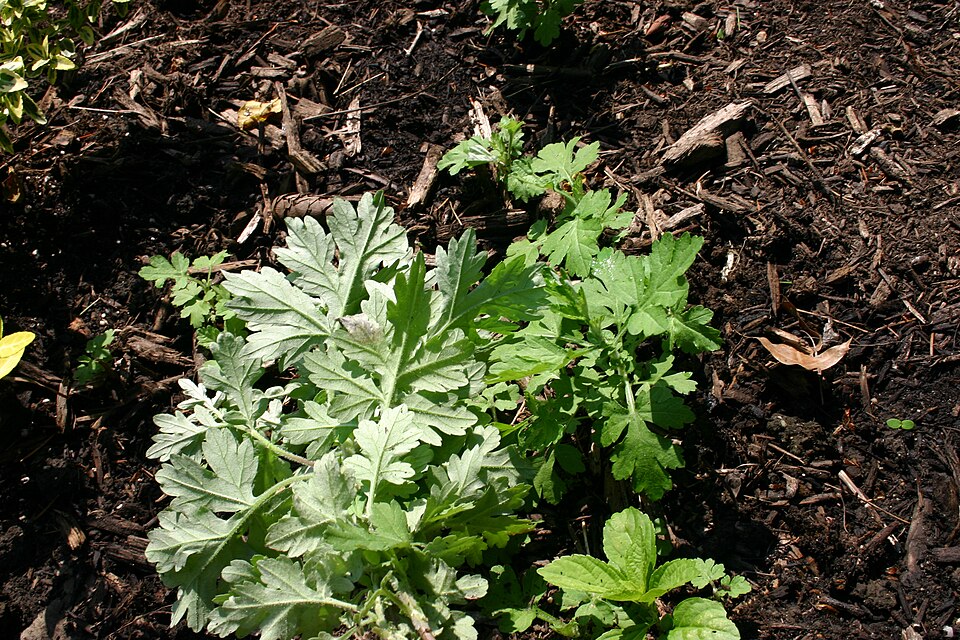
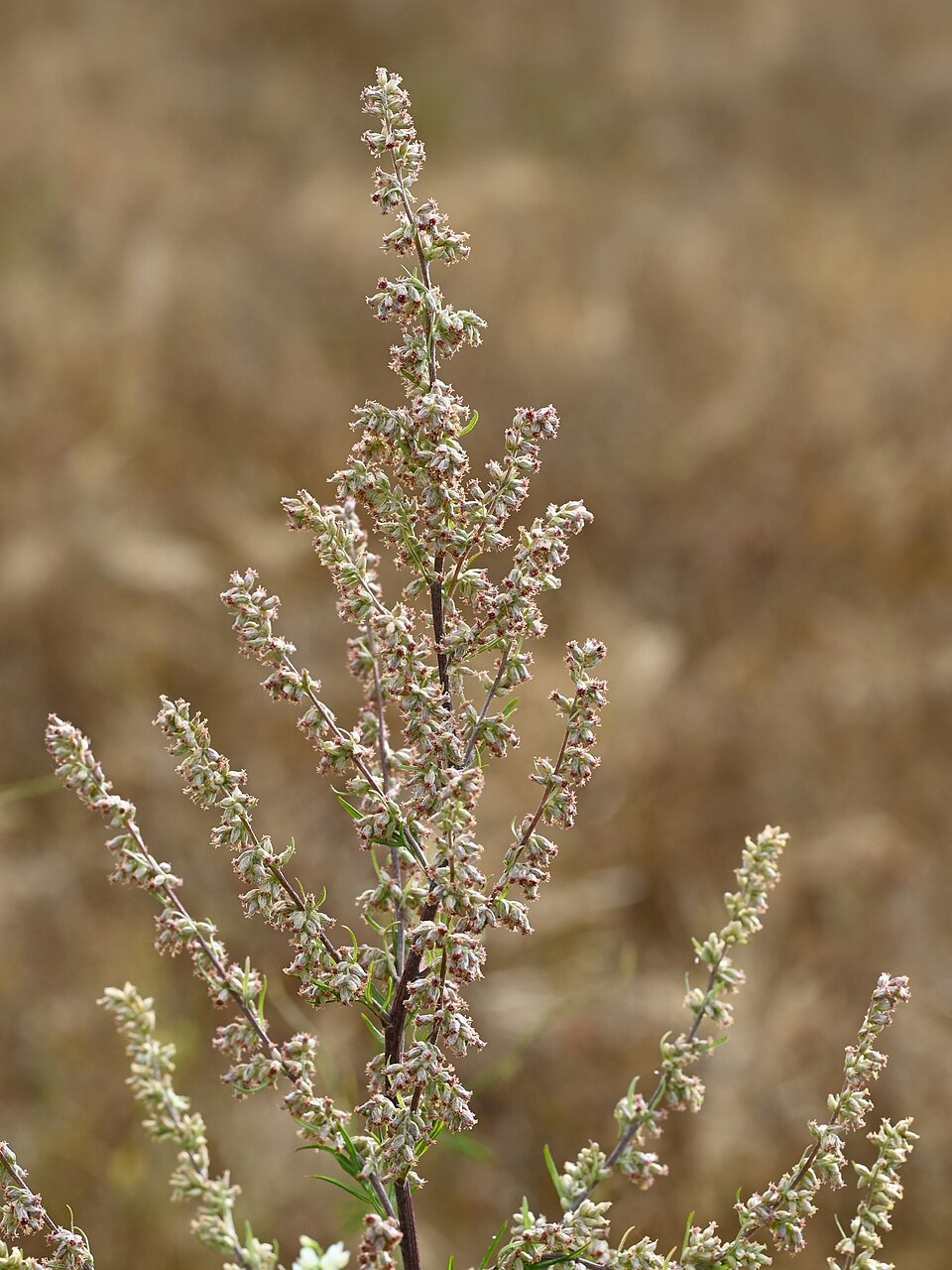
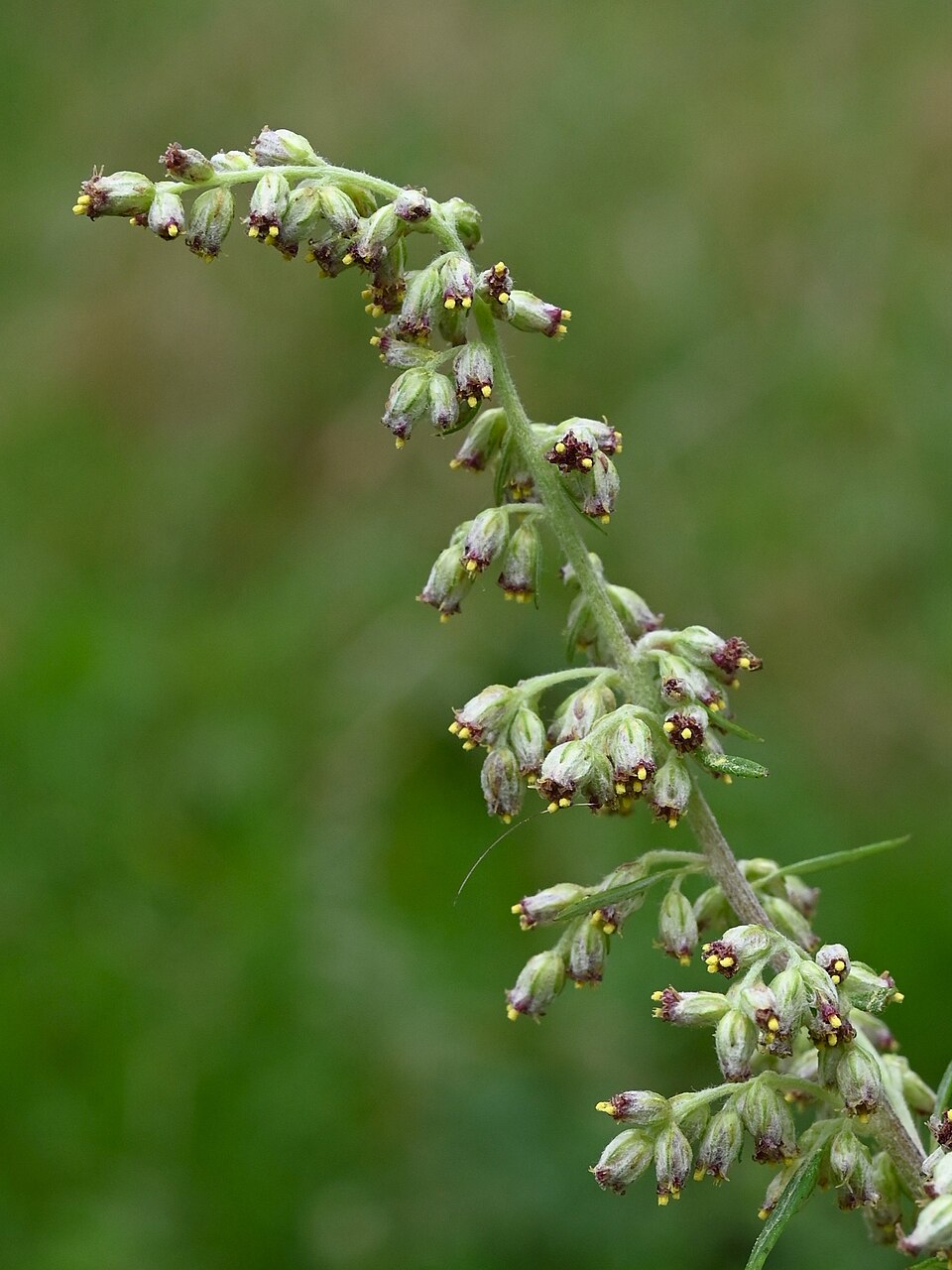
- Blooms: Tiny dull yellow-green to reddish-brown flower heads, July to October1
- Seed: Small, light seed blown by the wind1
How to tell it apart
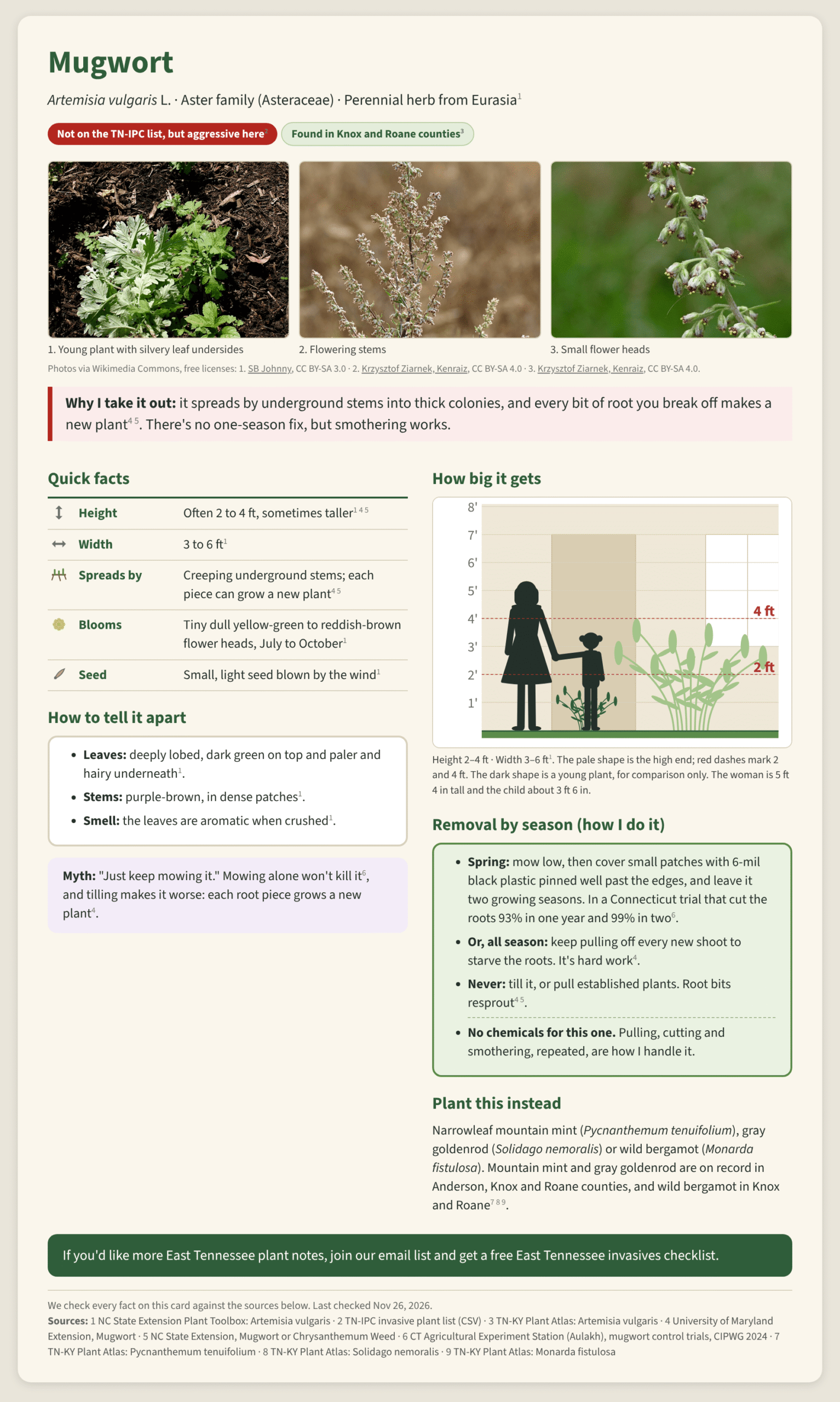
- Leaves: deeply lobed, dark green on top and paler and hairy underneath1.
- Stems: purple-brown, in dense patches1.
- Smell: the leaves are aromatic when crushed1.
How big it gets
Height 2–4 ft · Width 3–6 ft1. The pale shape is the high end; red dashes mark 2 and 4 ft. The dark shape is a young plant, for comparison only. The woman is 5 ft 4 in tall and the child about 3 ft 6 in.
Removal by season (how I do it)
- Spring: mow low, then cover small patches with 6-mil black plastic pinned well past the edges, and leave it two growing seasons. In a Connecticut trial that cut the roots 93% in one year and 99% in two6.
- Or, all season: keep pulling off every new shoot to starve the roots. It’s hard work4.
- Never: till it, or pull established plants. Root bits resprout4 5.
- No chemicals for this one. Pulling, cutting and smothering, repeated, are how I handle it.
Plant this instead
Narrowleaf mountain mint (Pycnanthemum tenuifolium), gray goldenrod (Solidago nemoralis) or wild bergamot (Monarda fistulosa). Mountain mint and gray goldenrod are on record in Anderson, Knox and Roane counties, and wild bergamot in Knox and Roane7 8 9.
Myth: “Just keep mowing it.” Mowing alone won’t kill it6, and tilling makes it worse: each root piece grows a new plant4.
If you’d like more East Tennessee plant notes, join our email list and get a free East Tennessee invasives checklist.
Sources
- NC State Extension Plant Toolbox: Artemisia vulgaris
- TN-IPC invasive plant list (CSV)
- TN-KY Plant Atlas: Artemisia vulgaris
- University of Maryland Extension, Mugwort
- NC State Extension, Mugwort or Chrysanthemum Weed
- CT Agricultural Experiment Station (Aulakh), mugwort control trials, CIPWG 2024
- TN-KY Plant Atlas: Pycnanthemum tenuifolium
- TN-KY Plant Atlas: Solidago nemoralis
- TN-KY Plant Atlas: Monarda fistulosa
Last checked Nov 26, 2026.