
Rosa multiflora Thunb. · Rose family (Rosaceae) · Thorny shrub from eastern Asia1
Invasive in Tennessee · TN-IPC: Established2 · Found in Anderson, Knox and Roane counties3



Why I take it out: it builds thorny mounds that swallow fence rows and field edges, and every flower cluster turns into a load of seed1. Repeated cutting wears it down.
Quick facts
- Height: 10 to 15 ft1
- Width: 14 to 15 ft1
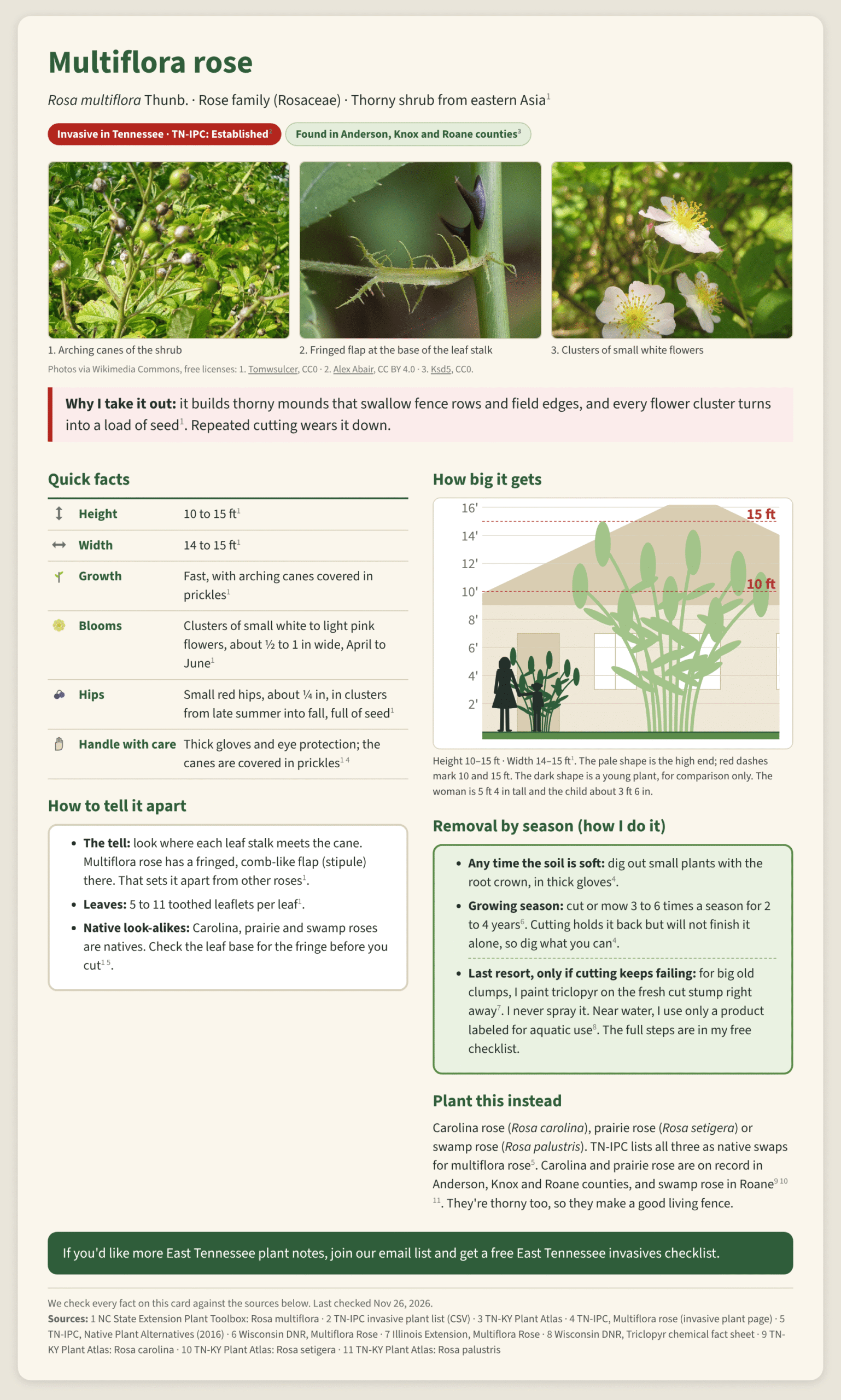
- Growth: Fast, with arching canes covered in prickles1
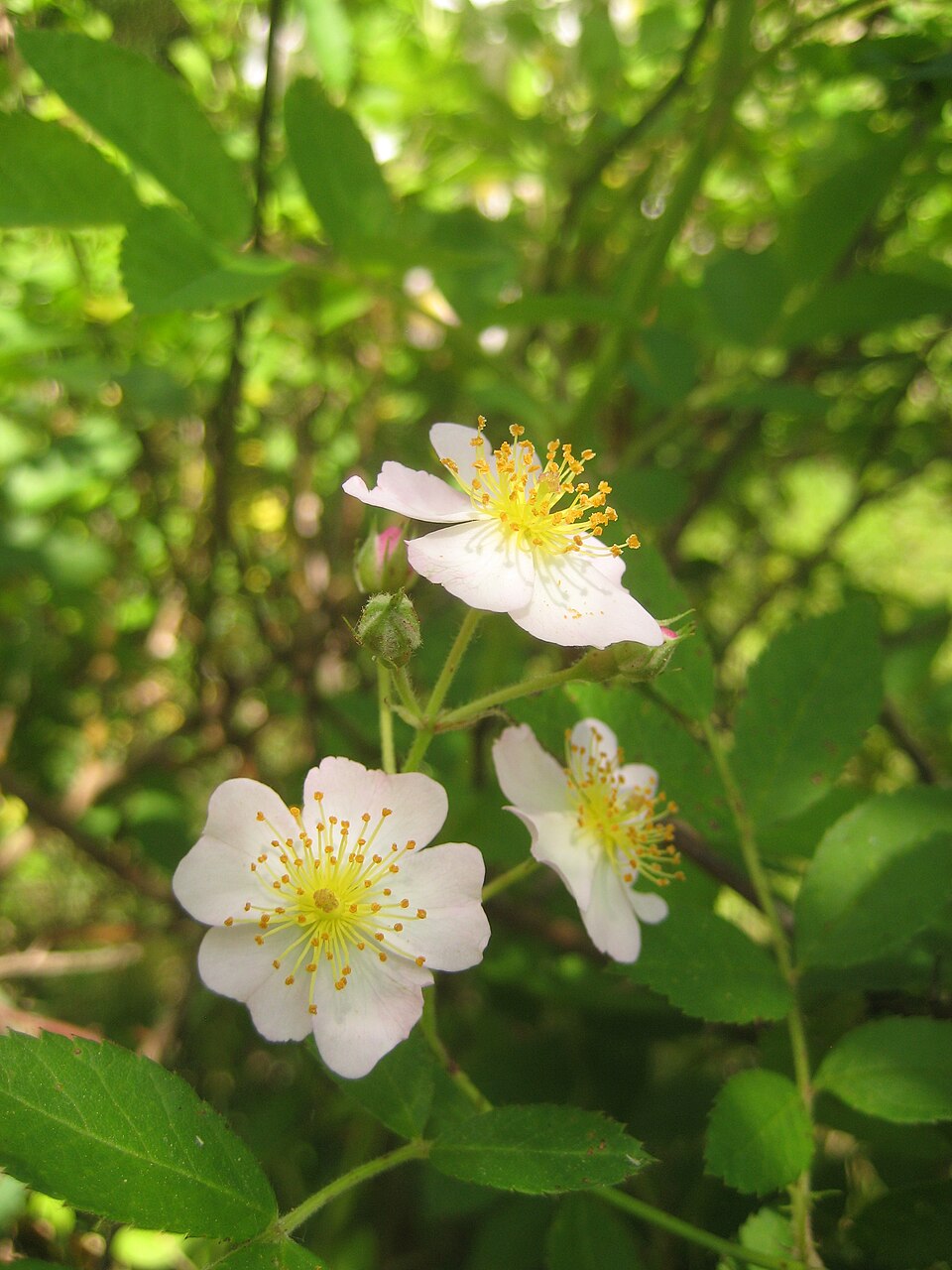
- Blooms: Clusters of small white to light pink flowers, about ½ to 1 in wide, April to June1
- Hips: Small red hips, about ¼ in, in clusters from late summer into fall, full of seed1
- Handle with care: Thick gloves and eye protection; the canes are covered in prickles1 4
How to tell it apart
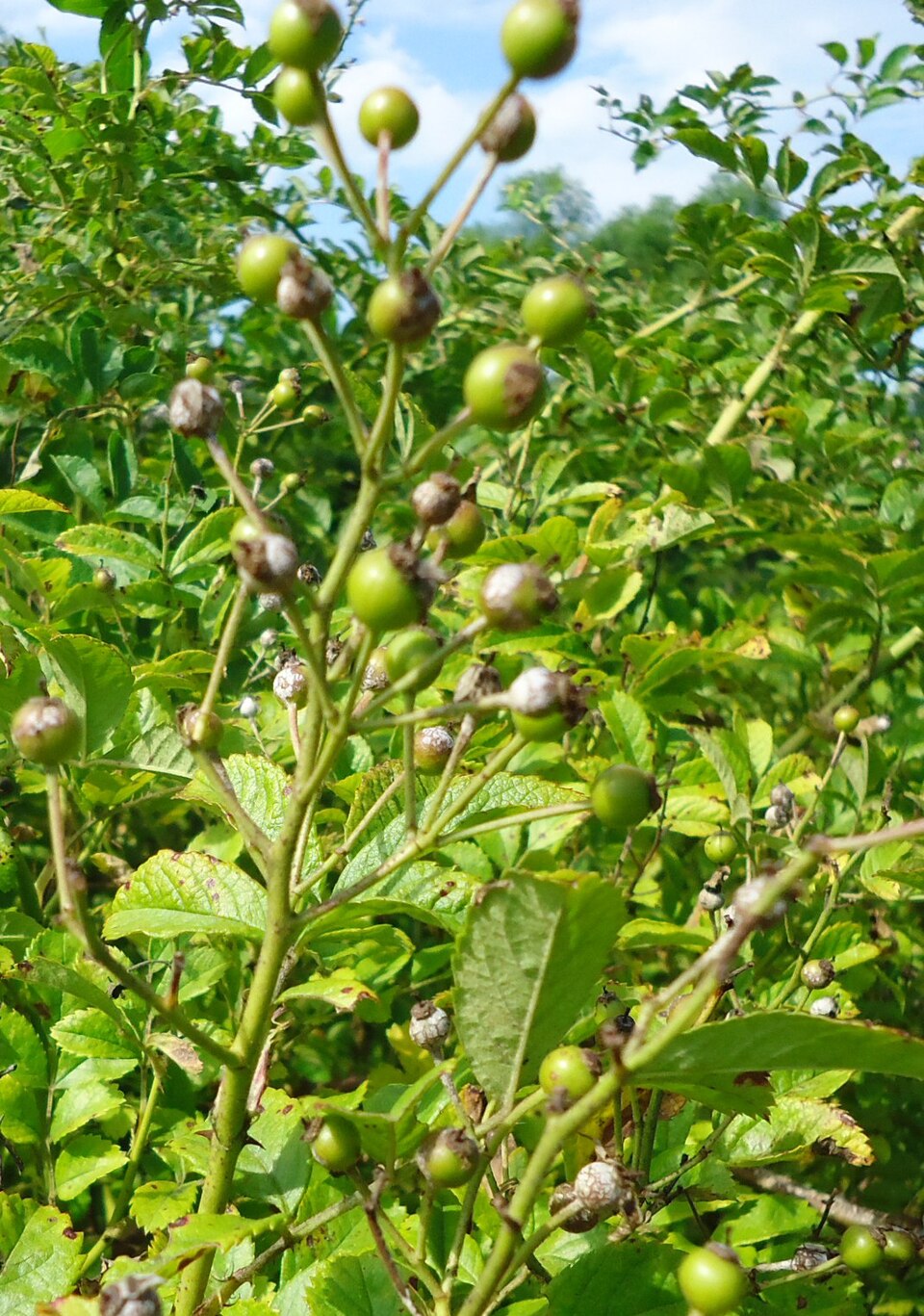
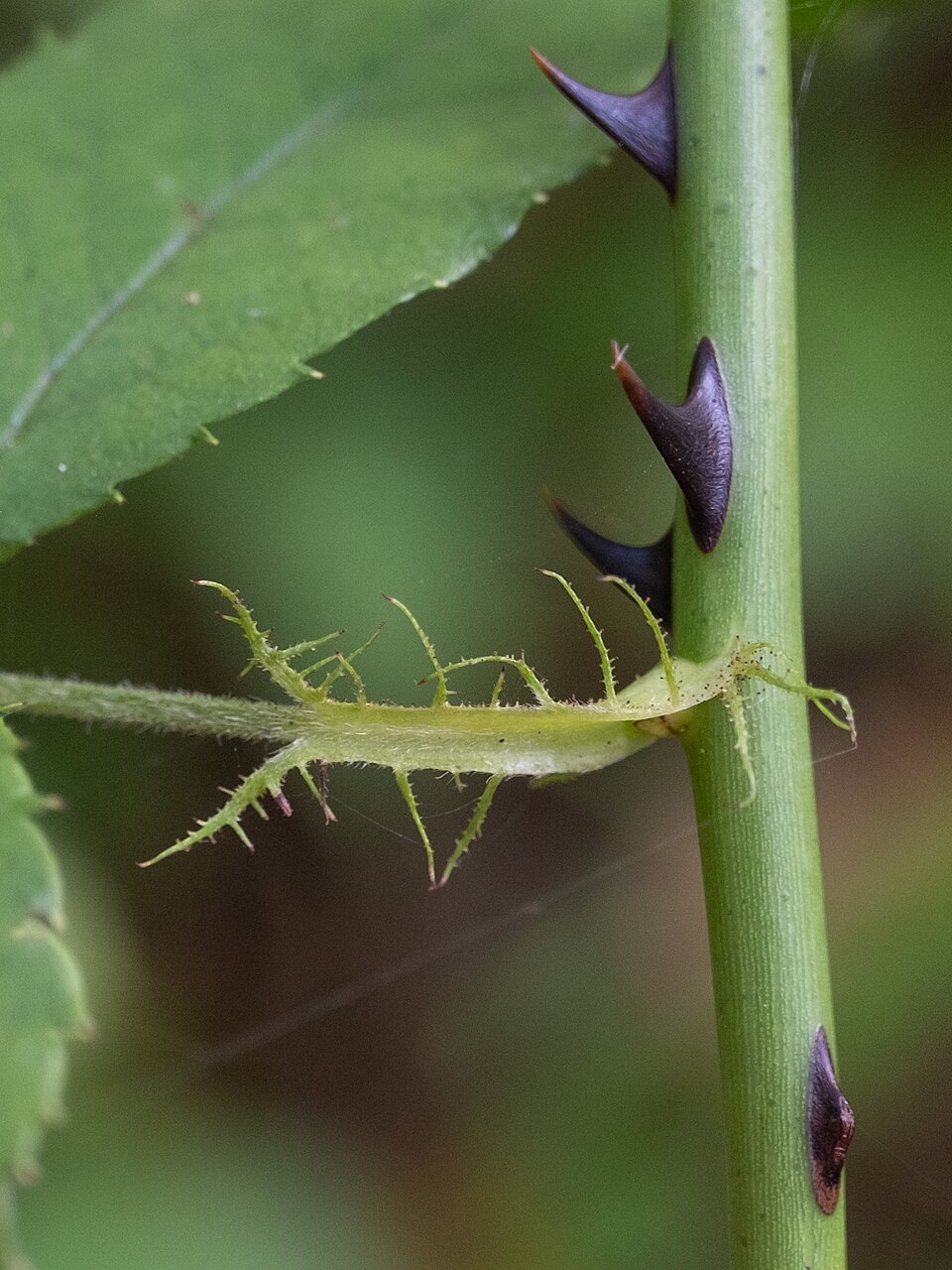
- The tell: look where each leaf stalk meets the cane. Multiflora rose has a fringed, comb-like flap (stipule) there. That sets it apart from other roses1.
- Leaves: 5 to 11 toothed leaflets per leaf1.
- Native look-alikes: Carolina, prairie and swamp roses are natives. Check the leaf base for the fringe before you cut1 5.
How big it gets
Height 10–15 ft · Width 14–15 ft1. The pale shape is the high end; red dashes mark 10 and 15 ft. The dark shape is a young plant, for comparison only. The woman is 5 ft 4 in tall and the child about 3 ft 6 in.
Removal by season (how I do it)
- Any time the soil is soft: dig out small plants with the root crown, in thick gloves4.
- Growing season: cut or mow 3 to 6 times a season for 2 to 4 years6. Cutting holds it back but will not finish it alone, so dig what you can4.
- Last resort, only if cutting keeps failing: for big old clumps, I paint triclopyr on the fresh cut stump right away7. I never spray it. Near water, I use only a product labeled for aquatic use8. The full steps are in my free checklist.
Plant this instead
Carolina rose (Rosa carolina), prairie rose (Rosa setigera) or swamp rose (Rosa palustris). TN-IPC lists all three as native swaps for multiflora rose5. Carolina and prairie rose are on record in Anderson, Knox and Roane counties, and swamp rose in Roane9 10 11. They’re thorny too, so they make a good living fence.
If you’d like more East Tennessee plant notes, join our email list and get a free East Tennessee invasives checklist.
Sources
- NC State Extension Plant Toolbox: Rosa multiflora
- TN-IPC invasive plant list (CSV)
- TN-KY Plant Atlas
- TN-IPC, Multiflora rose (invasive plant page)
- TN-IPC, Native Plant Alternatives (2016)
- Wisconsin DNR, Multiflora Rose
- Illinois Extension, Multiflora Rose
- Wisconsin DNR, Triclopyr chemical fact sheet
- TN-KY Plant Atlas: Rosa carolina
- TN-KY Plant Atlas: Rosa setigera
- TN-KY Plant Atlas: Rosa palustris
Last checked Nov 26, 2026.