
Perilla frutescens (L.) Britton · Mint family (Lamiaceae) · Annual herb from Asia1
Invasive in Tennessee · TN-IPC: Established2 · Found in Anderson and Knox counties3
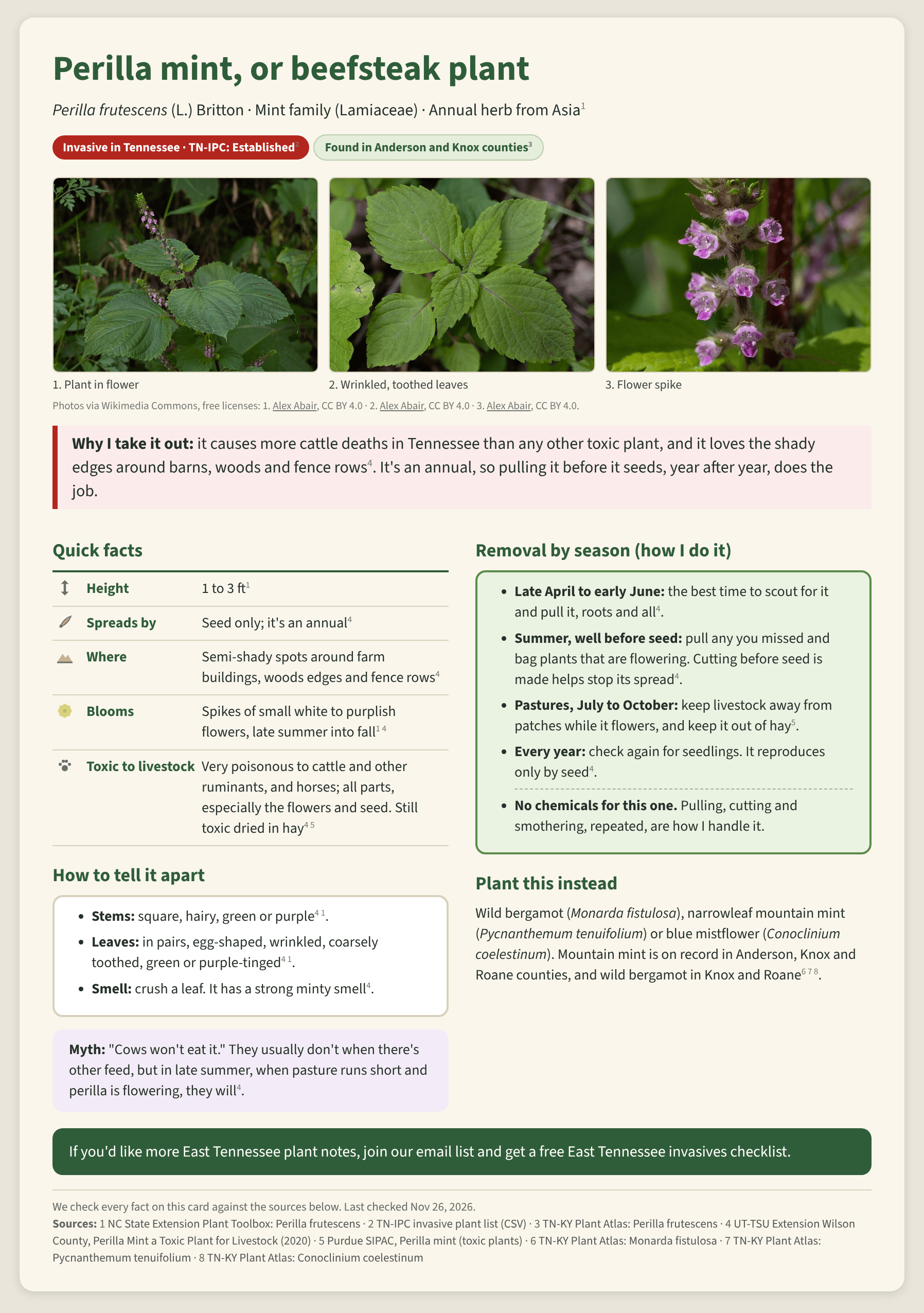
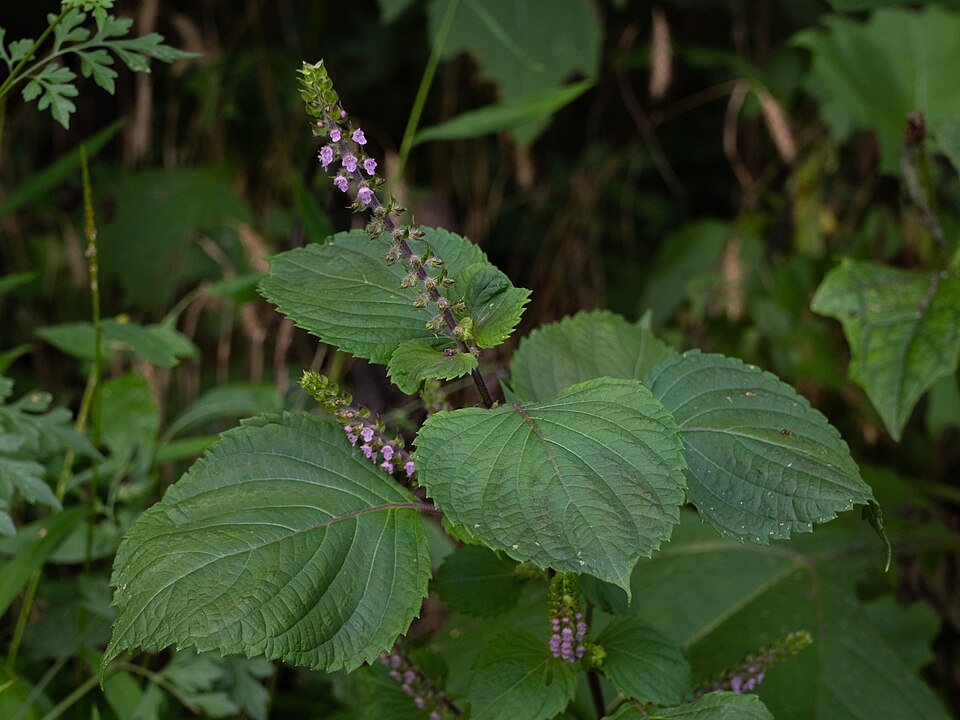

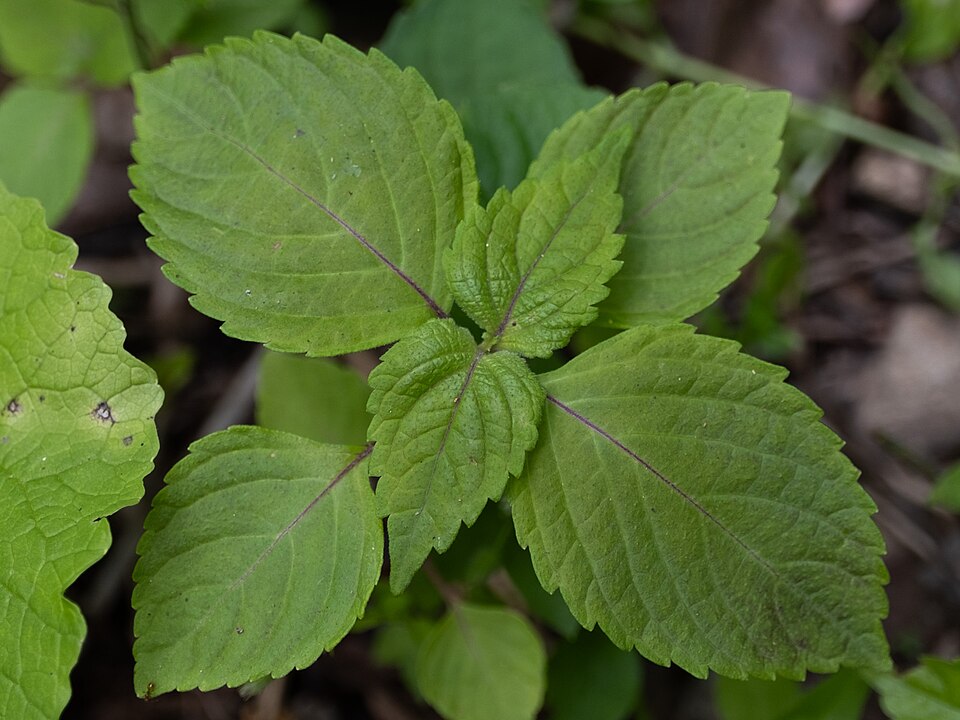

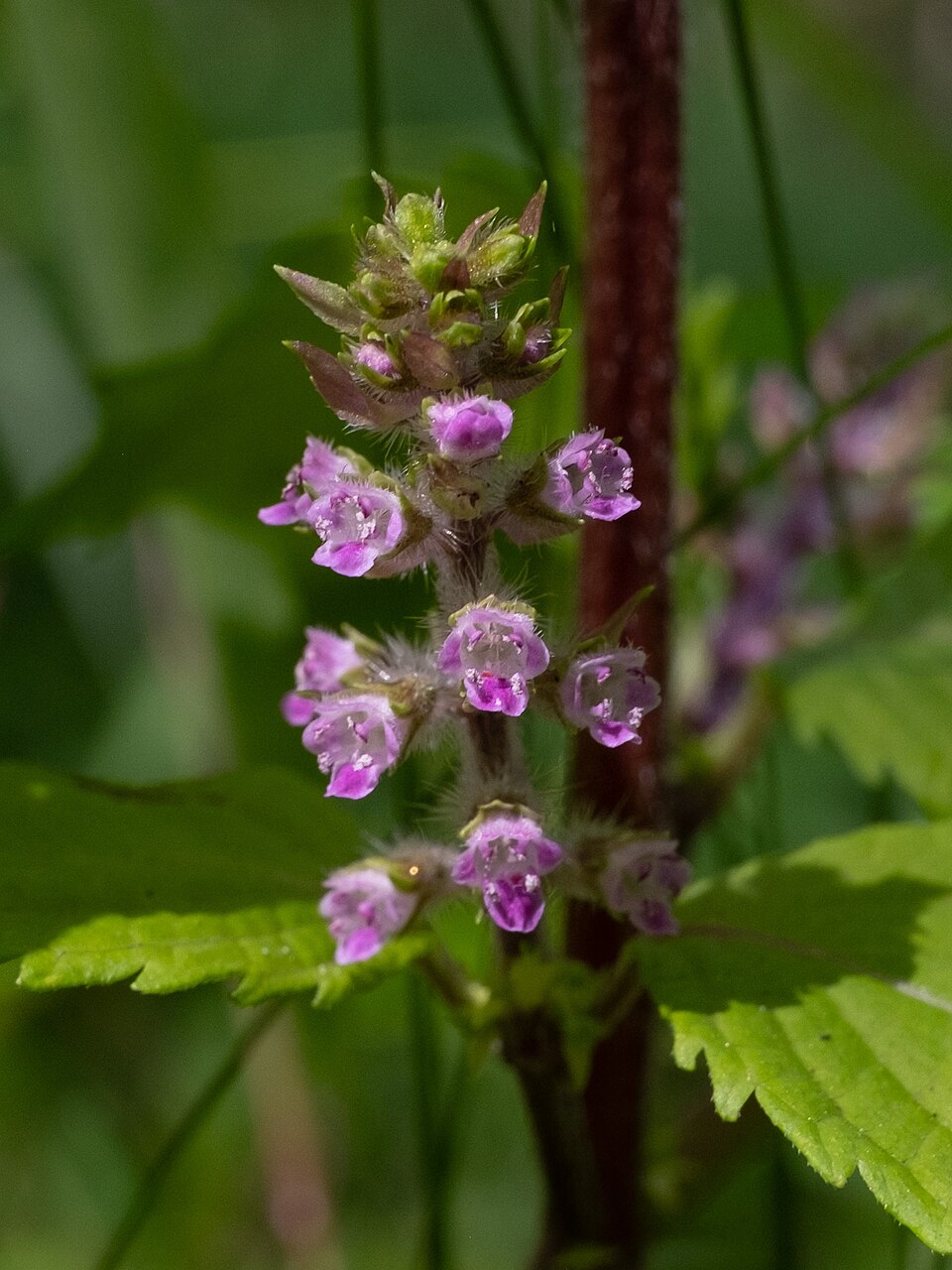

Why I take it out: it causes more cattle deaths in Tennessee than any other toxic plant, and it loves the shady edges around barns, woods and fence rows4. It’s an annual, so pulling it before it seeds, year after year, does the job.
Quick facts
- Height: 1 to 3 ft1
- Spreads by: Seed only; it’s an annual4
- Where: Semi-shady spots around farm buildings, woods edges and fence rows4
- Blooms: Spikes of small white to purplish flowers, late summer into fall1 4
- Toxic to livestock: Very poisonous to cattle and other ruminants, and horses; all parts, especially the flowers and seed. Still toxic dried in hay4 5
How to tell it apart
- Stems: square, hairy, green or purple4 1.
- Leaves: in pairs, egg-shaped, wrinkled, coarsely toothed, green or purple-tinged4 1.
- Smell: crush a leaf. It has a strong minty smell4.
Removal by season (how I do it)
- Late April to early June: the best time to scout for it and pull it, roots and all4.
- Summer, well before seed: pull any you missed and bag plants that are flowering. Cutting before seed is made helps stop its spread4.
- Pastures, July to October: keep livestock away from patches while it flowers, and keep it out of hay5.
- Every year: check again for seedlings. It reproduces only by seed4.
- No chemicals for this one. Pulling, cutting and smothering, repeated, are how I handle it.
Plant this instead
Wild bergamot (Monarda fistulosa), narrowleaf mountain mint (Pycnanthemum tenuifolium) or blue mistflower (Conoclinium coelestinum). Mountain mint is on record in Anderson, Knox and Roane counties, and wild bergamot in Knox and Roane6 7 8.
Myth: “Cows won’t eat it.” They usually don’t when there’s other feed, but in late summer, when pasture runs short and perilla is flowering, they will4.
If you’d like more East Tennessee plant notes, join our email list and get a free East Tennessee invasives checklist.
Sources
- NC State Extension Plant Toolbox: Perilla frutescens
- TN-IPC invasive plant list (CSV)
- TN-KY Plant Atlas: Perilla frutescens
- UT-TSU Extension Wilson County, Perilla Mint a Toxic Plant for Livestock (2020)
- Purdue SIPAC, Perilla mint (toxic plants)
- TN-KY Plant Atlas: Monarda fistulosa
- TN-KY Plant Atlas: Pycnanthemum tenuifolium
- TN-KY Plant Atlas: Conoclinium coelestinum
Last checked Nov 26, 2026.