
Euonymus fortunei (Turcz.) Hand.-Maz. · Bittersweet family (Celastraceae) · Evergreen groundcover and climbing vine from eastern Asia1 2
Invasive in Tennessee · TN-IPC: Established3 · Found in Anderson and Knox counties4
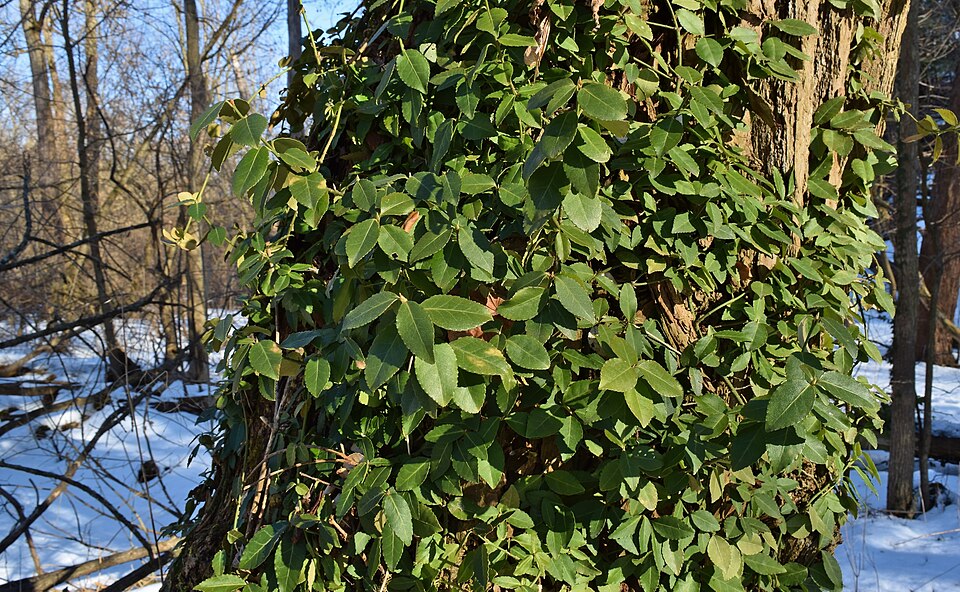



Why I take it out: it’s sold as an easy evergreen groundcover, then it carpets the woods floor and climbs the trees. Once it climbs, it fruits, and birds carry the seed off2. No chemicals needed; cutting and pulling get it.
Quick facts
- Grows: A low shrub to 3 ft, or a trailing vine that climbs trees and rocks 40 to 70 ft with clinging roots2
- Spreads by: Vines that root where they touch ground, plus seed carried by birds, other animals and water2
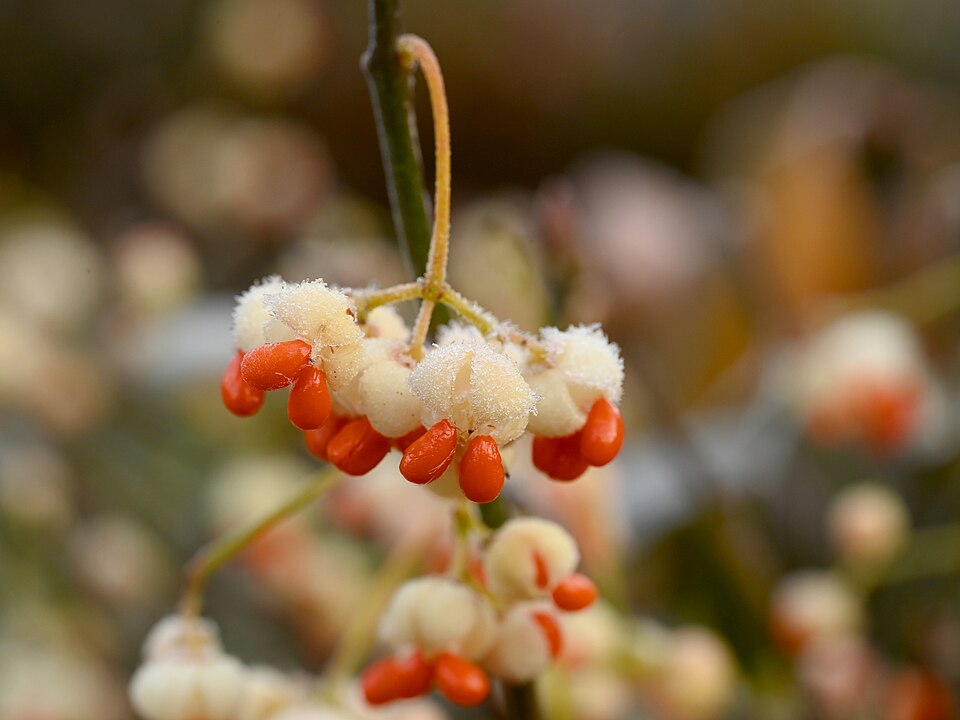
- Fruit: Pale capsules split in fall to show orange seeds1 2
- Blooms: Small, greenish-white, easy to miss1
- Toxic: Can cause vomiting and diarrhea if eaten in large amounts1
How to tell it apart
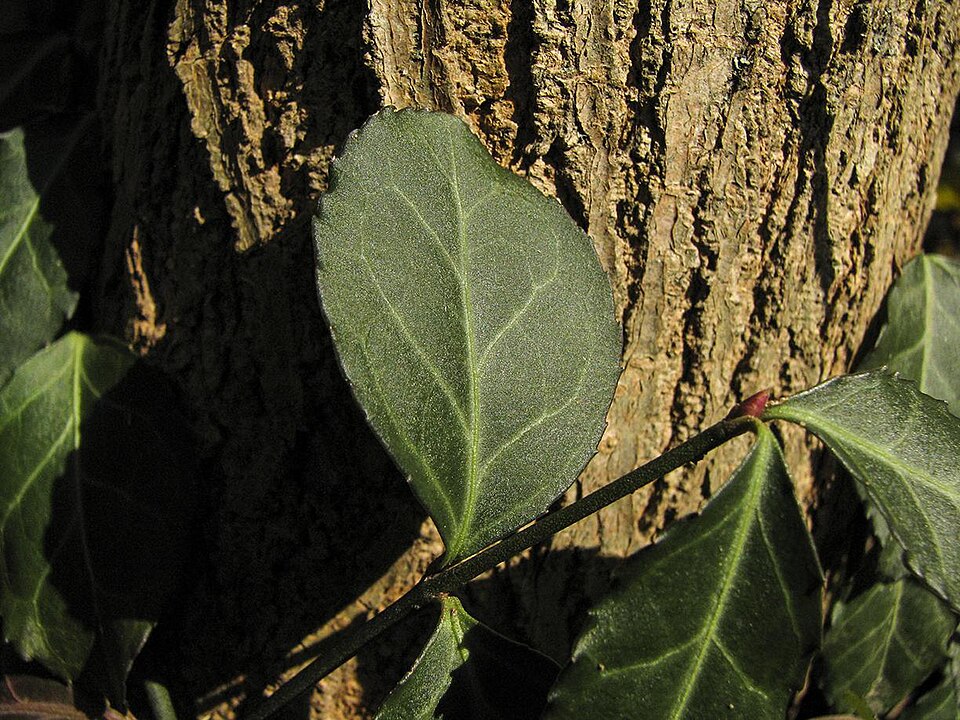
- Leaves: in pairs, thick, glossy, dark green (or green and white on garden types), with shallow rounded teeth; green all year1 2.
- Stems: green when young; climbing stems hold on with little rootlets1 2.
- Where it fruits: only the climbing growth makes fruit, so a vine up a tree is the one to cut first2.
Removal by season (how I do it)
- First, any time: cut every climbing stem at the ground so it can’t fruit2.
- When the soil is moist: hand-pull or grub out ground mats, getting all the roots5.
- Rest of the season and the next few years: re-cut and re-pull the regrowth. It takes repeat trips6.
- No chemicals for this one. Pulling, cutting and smothering, repeated, are how I handle it.
Plant this instead
Golden ragwort (Packera aurea; toxic if eaten, and can irritate skin7), creeping phlox (Phlox stolonifera) or Allegheny spurge (Pachysandra procumbens). All three are East Tennessee natives: golden ragwort is on record in Anderson, Knox and Roane counties, creeping phlox in Knox, and Allegheny spurge in Anderson and Roane8 9 10.
Myth: “It’s a safe groundcover.” It’s still sold and planted, but it escapes into the woods and climbs2.
If you’d like more East Tennessee plant notes, join our email list and get a free East Tennessee invasives checklist.
Sources
- NC State Extension Plant Toolbox: Euonymus fortunei
- USDA Forest Service, Miller et al., SRS-131
- TN-IPC invasive plant list (CSV)
- TN-KY Plant Atlas
- UMD Extension, Invasives in Your Woodland: Winter Creeper
- Illinois Nature Preserves Commission, Wintercreeper management guideline
- NC State Extension Plant Toolbox: Packera aurea
- TN-KY Plant Atlas: Packera aurea
- TN-KY Plant Atlas: Phlox stolonifera
- TN-KY Plant Atlas: Pachysandra procumbens
Last checked Nov 26, 2026.