
Hedera helix L. · Ginseng family (Araliaceae) · Evergreen climbing vine from Europe1
Invasive in Tennessee · TN-IPC: Established2 · Found in Anderson and Knox counties3
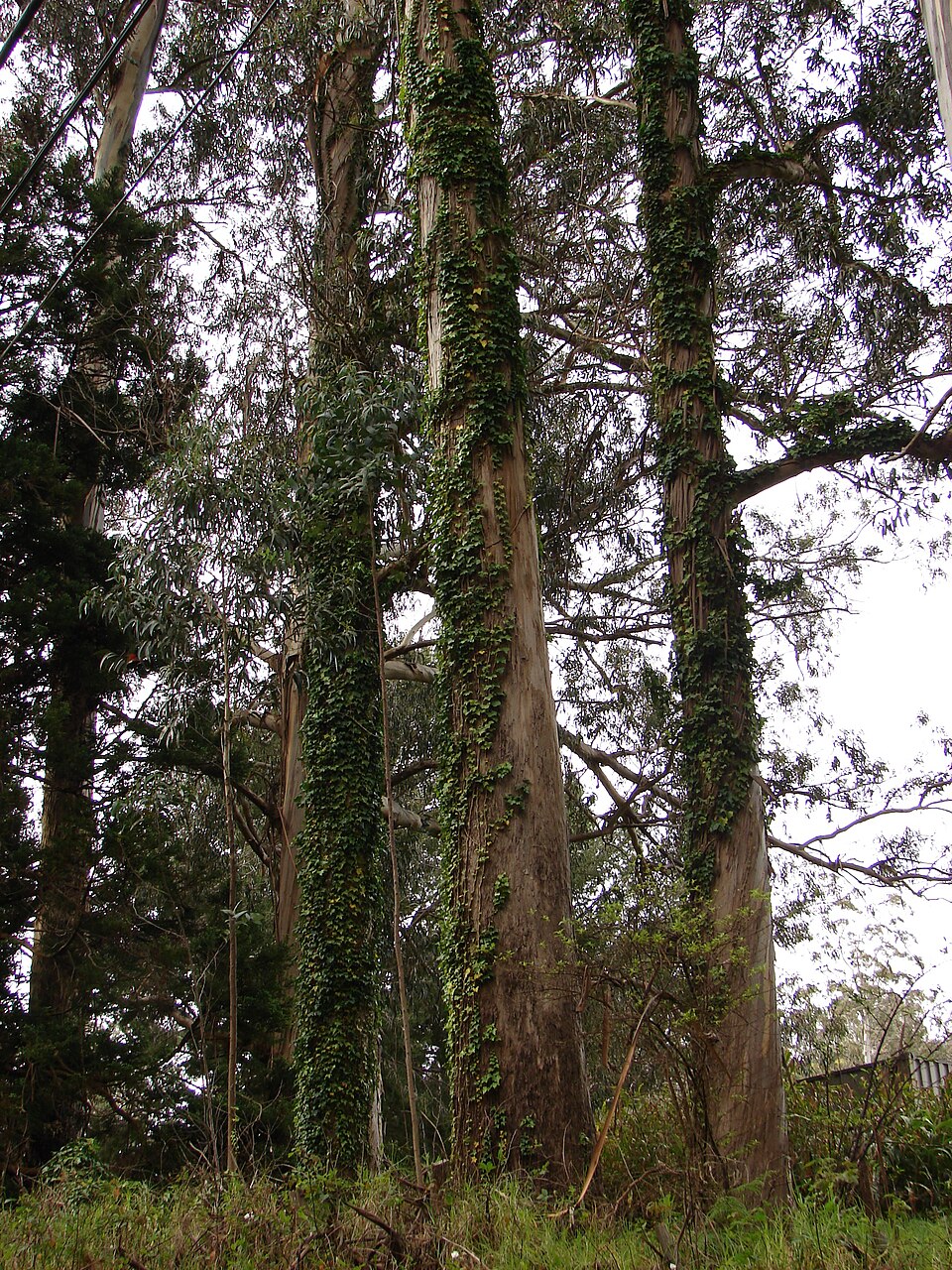



Why I take it out: it wraps tree trunks and smothers the woods floor, and once it climbs high enough to flower, birds spread the berries4 1. No chemicals needed, just steady work.
Quick facts
- Grows: Climbs to 90 ft with clinging rootlets, or carpets the ground4
- Spreads by: Bird-carried seed, and vines that root where they touch the ground4
- Blooms: Small greenish-yellow clusters, only on mature climbing stems, in summer1 4
- Berries: Dark purple to black berries in winter and spring4 1
- Handle with care: The sap can cause a rash, so wear gloves and long sleeves4 1
- Toxic: Poisonous if eaten1
How to tell it apart
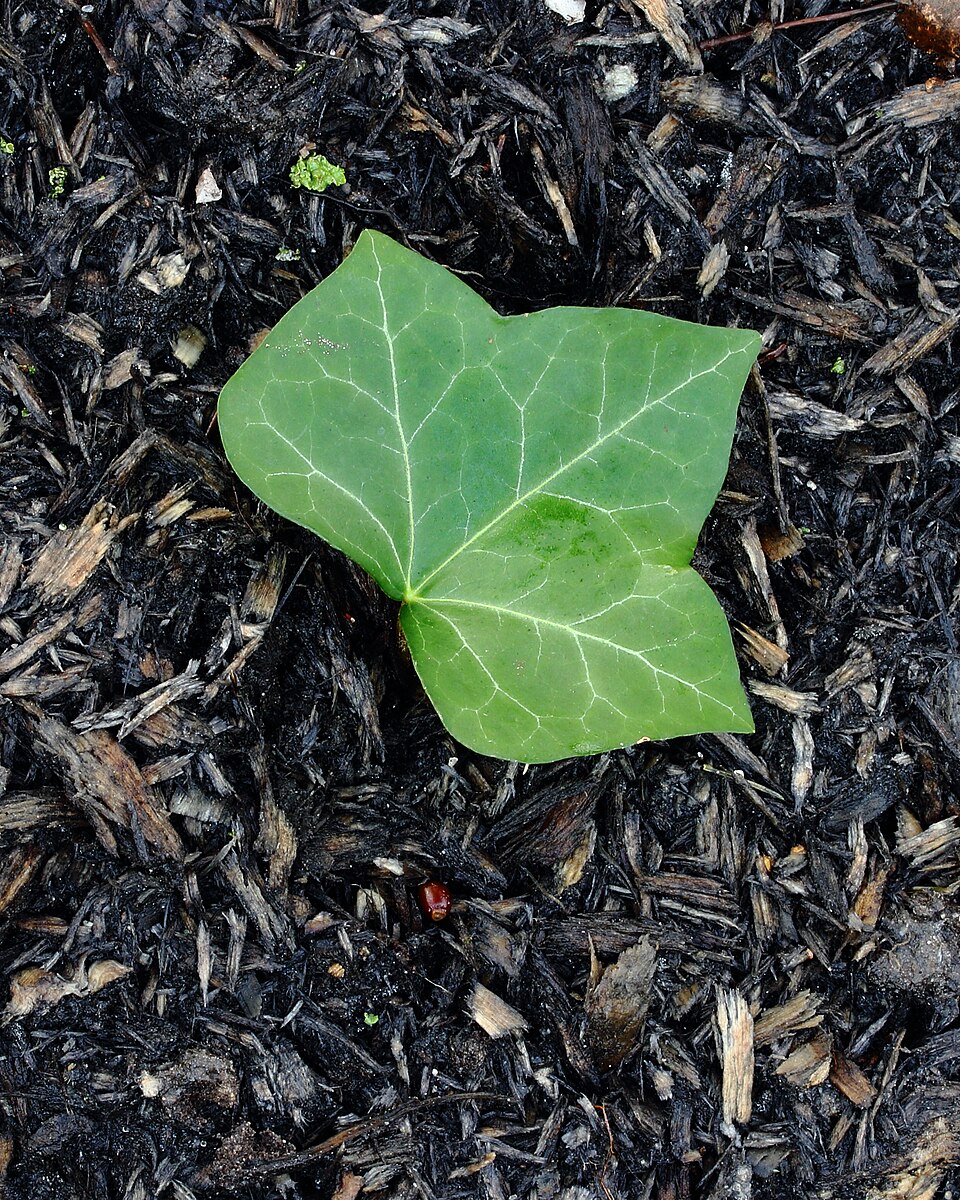
- Ground leaves: thick, waxy, dark green, with 3 to 5 pointed lobes and pale veins1 4.
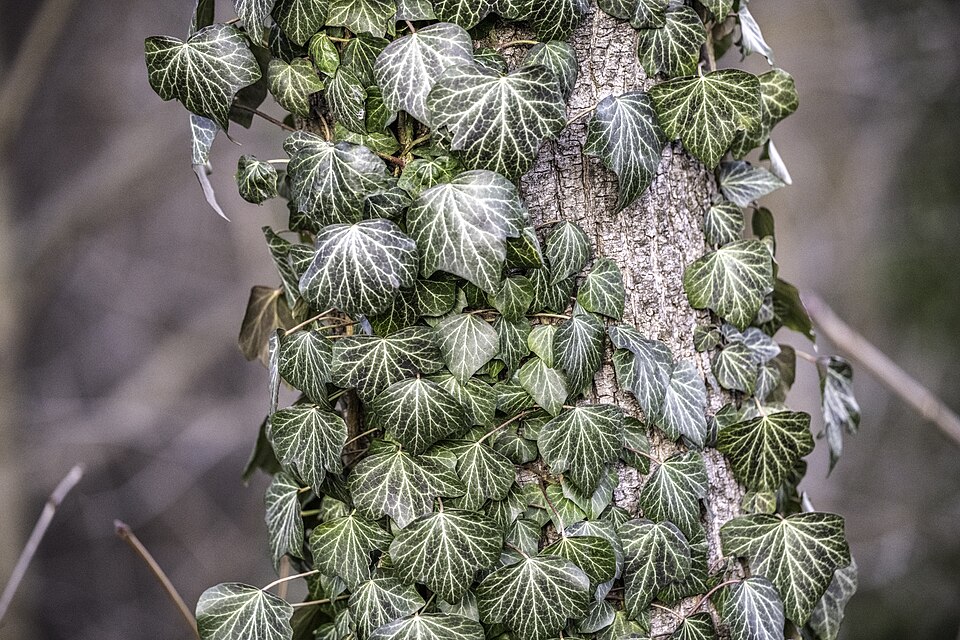
- Climbing, fruiting stems: leaves change to oval or diamond-shaped, without lobes1 4.
- Stems: hairy-looking rootlets along the stems hold it to bark and walls1.
Removal by season (how I do it)
- First, on trees: cut every vine at the base and again as high as you can easily reach. The vines left up in the tree die and fall off on their own. Don’t pull them down; that hurts the bark5.
- Fall to spring, in moist soil: hand-pull or roll up ground mats, clearing a ring around each tree. Bag the cuttings5 4.
- Big patches: mow often, like a lawn5.
- Every year after: vines grow back from roots, so go back regularly and pull regrowth5.
- No chemicals for this one. Pulling, cutting and smothering, repeated, are how I handle it.
Plant this instead
Christmas fern (Polystichum acrostichoides) or wild ginger (Asarum canadense) on the ground; crossvine (Bignonia capreolata) on a wall or fence. Christmas fern is on record in every East Tennessee county, and wild ginger and crossvine in Anderson, Knox and Roane6 7 8.
Myth: “Ivy doesn’t hurt the tree.” It encases trunks and climbs high into the crown, and the climbing growth is what flowers and seeds4.
If you’d like more East Tennessee plant notes, join our email list and get a free East Tennessee invasives checklist.
Sources
- NC State Extension Plant Toolbox: Hedera helix
- TN-IPC invasive plant list (CSV)
- TN-KY Plant Atlas
- USDA Forest Service, Miller et al., SRS-131
- NC State Extension, Controlling English Ivy in Urban Landscapes
- TN-KY Plant Atlas: Polystichum acrostichoides
- TN-KY Plant Atlas: Asarum canadense
- TN-KY Plant Atlas: Bignonia capreolata
Last checked Nov 26, 2026.