
Microstegium vimineum (Trin.) A. Camus · Grass family (Poaceae) · Annual grass from Asia1 2
Invasive in Tennessee · TN-IPC: Established3 · Found in Anderson, Knox and Roane counties4
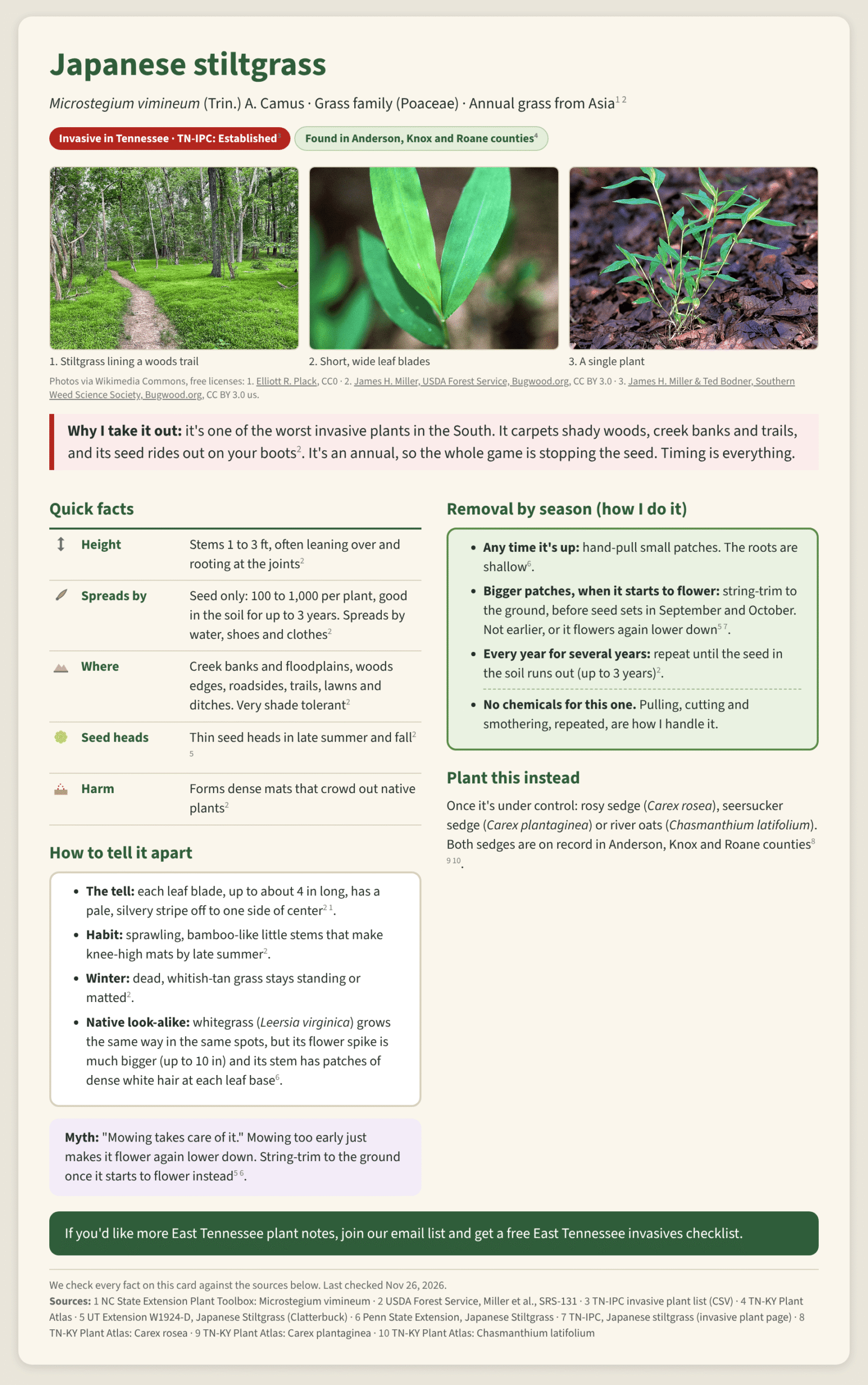
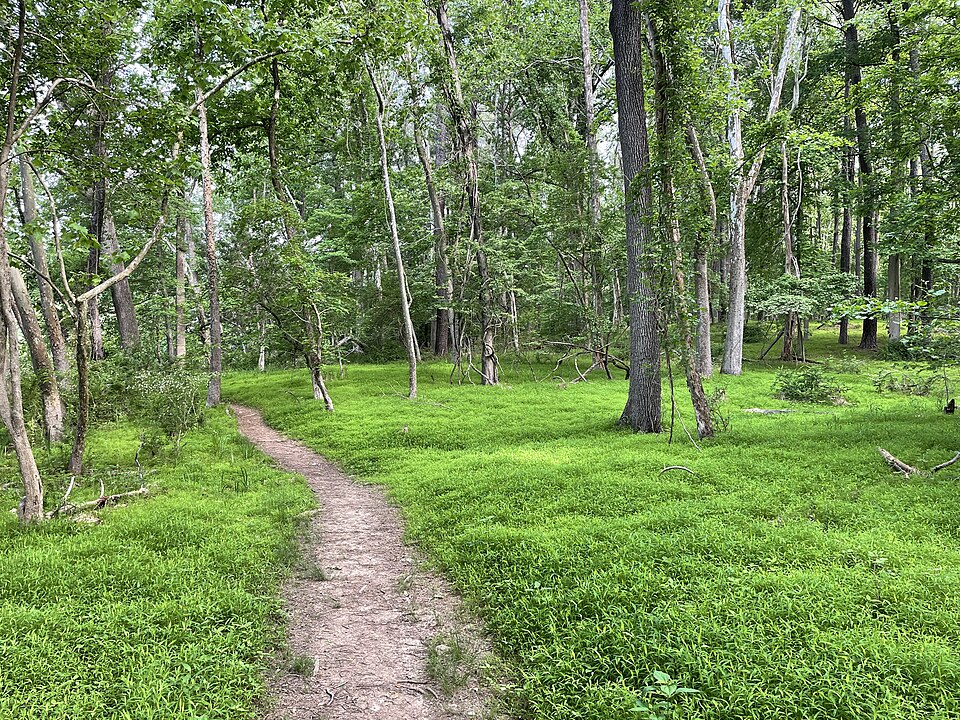



Why I take it out: it’s one of the worst invasive plants in the South. It carpets shady woods, creek banks and trails, and its seed rides out on your boots2. It’s an annual, so the whole game is stopping the seed. Timing is everything.
Quick facts
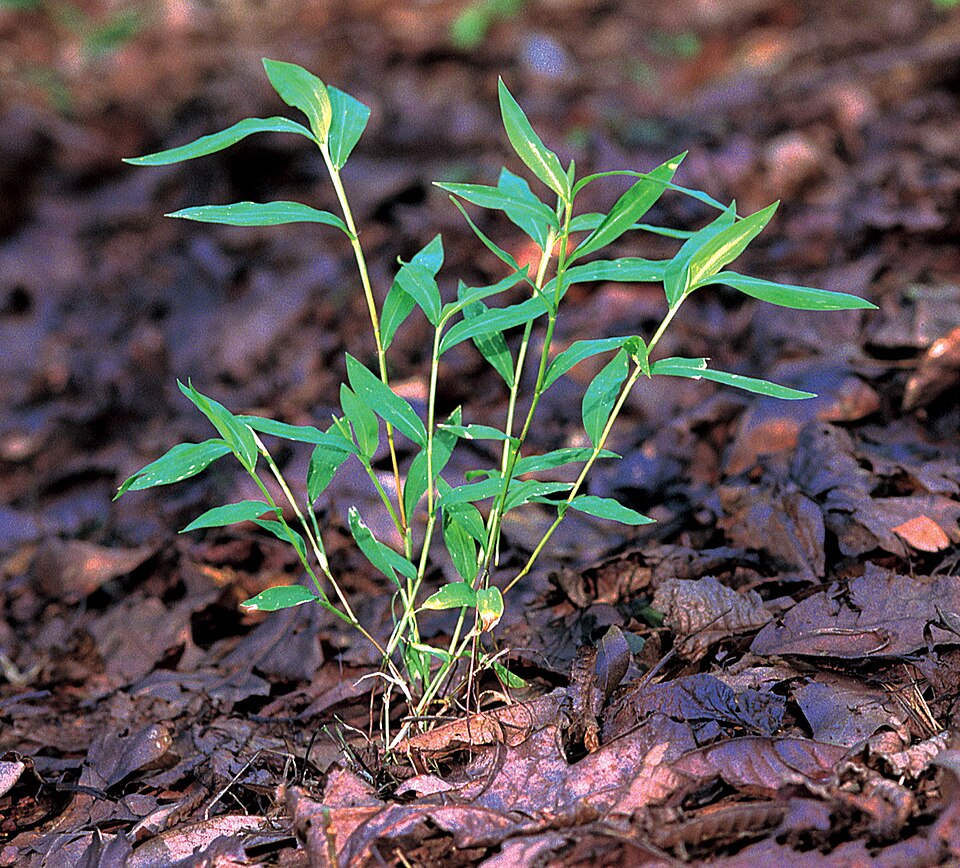
- Height: Stems 1 to 3 ft, often leaning over and rooting at the joints2
- Spreads by: Seed only: 100 to 1,000 per plant, good in the soil for up to 3 years. Spreads by water, shoes and clothes2
- Where: Creek banks and floodplains, woods edges, roadsides, trails, lawns and ditches. Very shade tolerant2
- Seed heads: Thin seed heads in late summer and fall2 5
- Harm: Forms dense mats that crowd out native plants2
How to tell it apart
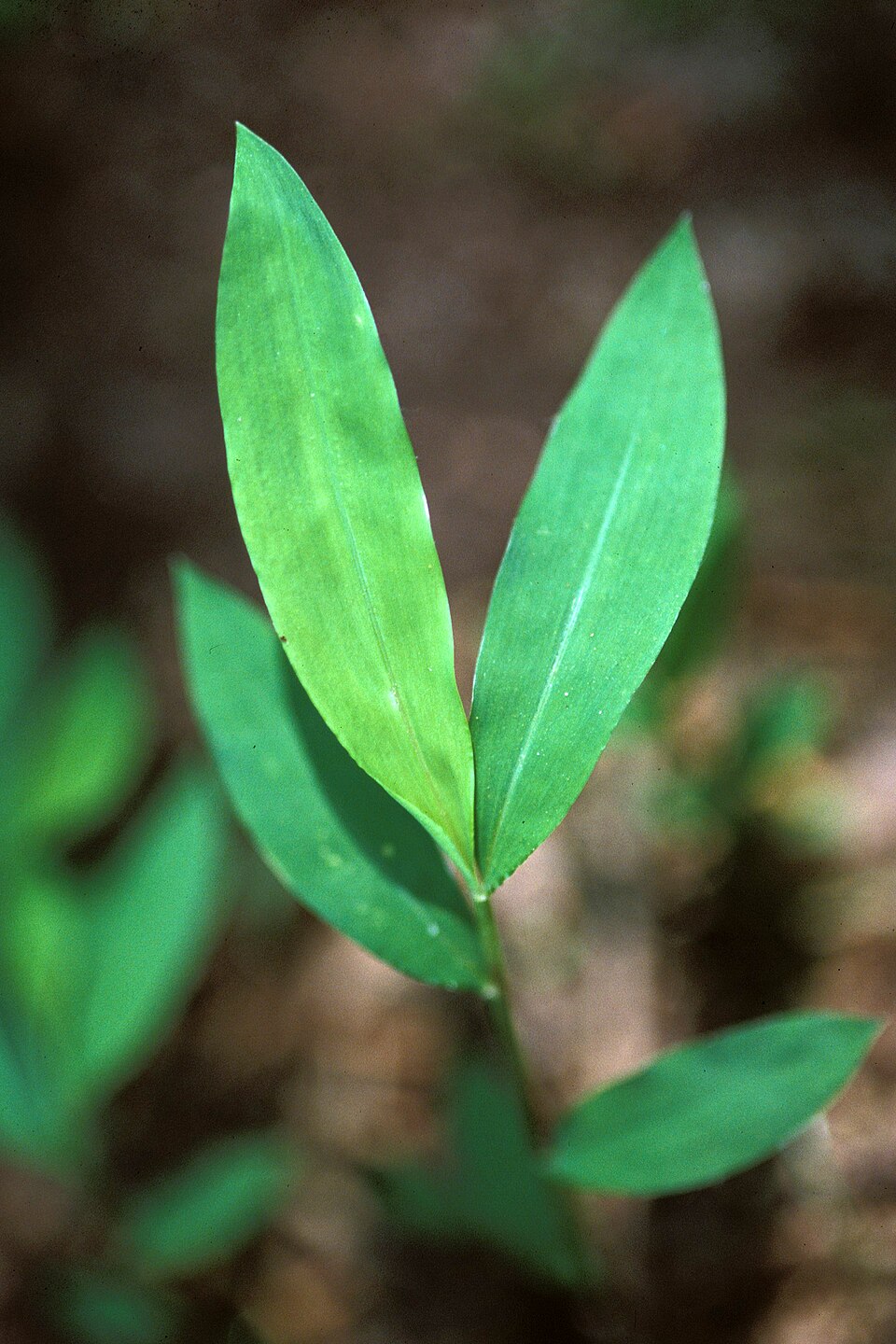
- The tell: each leaf blade, up to about 4 in long, has a pale, silvery stripe off to one side of center2 1.
- Habit: sprawling, bamboo-like little stems that make knee-high mats by late summer2.
- Winter: dead, whitish-tan grass stays standing or matted2.
- Native look-alike: whitegrass (Leersia virginica) grows the same way in the same spots, but its flower spike is much bigger (up to 10 in) and its stem has patches of dense white hair at each leaf base6.
Removal by season (how I do it)
- Any time it’s up: hand-pull small patches. The roots are shallow6.
- Bigger patches, when it starts to flower: string-trim to the ground, before seed sets in September and October. Not earlier, or it flowers again lower down5 7.
- Every year for several years: repeat until the seed in the soil runs out (up to 3 years)2.
- No chemicals for this one. Pulling, cutting and smothering, repeated, are how I handle it.
Plant this instead
Once it’s under control: rosy sedge (Carex rosea), seersucker sedge (Carex plantaginea) or river oats (Chasmanthium latifolium). Both sedges are on record in Anderson, Knox and Roane counties8 9 10.
Myth: “Mowing takes care of it.” Mowing too early just makes it flower again lower down. String-trim to the ground once it starts to flower instead5 6.
If you’d like more East Tennessee plant notes, join our email list and get a free East Tennessee invasives checklist.
Sources
- NC State Extension Plant Toolbox: Microstegium vimineum
- USDA Forest Service, Miller et al., SRS-131
- TN-IPC invasive plant list (CSV)
- TN-KY Plant Atlas
- UT Extension W1924-D, Japanese Stiltgrass (Clatterbuck)
- Penn State Extension, Japanese Stiltgrass
- TN-IPC, Japanese stiltgrass (invasive plant page)
- TN-KY Plant Atlas: Carex rosea
- TN-KY Plant Atlas: Carex plantaginea
- TN-KY Plant Atlas: Chasmanthium latifolium
Last checked Nov 26, 2026.