
Sorghum halepense (L.) Pers. · Grass family (Poaceae) · Perennial warm-season grass from the eastern Mediterranean and Middle East1
Invasive in Tennessee · TN-IPC: Established2 · Found in Anderson, Knox and Roane counties3
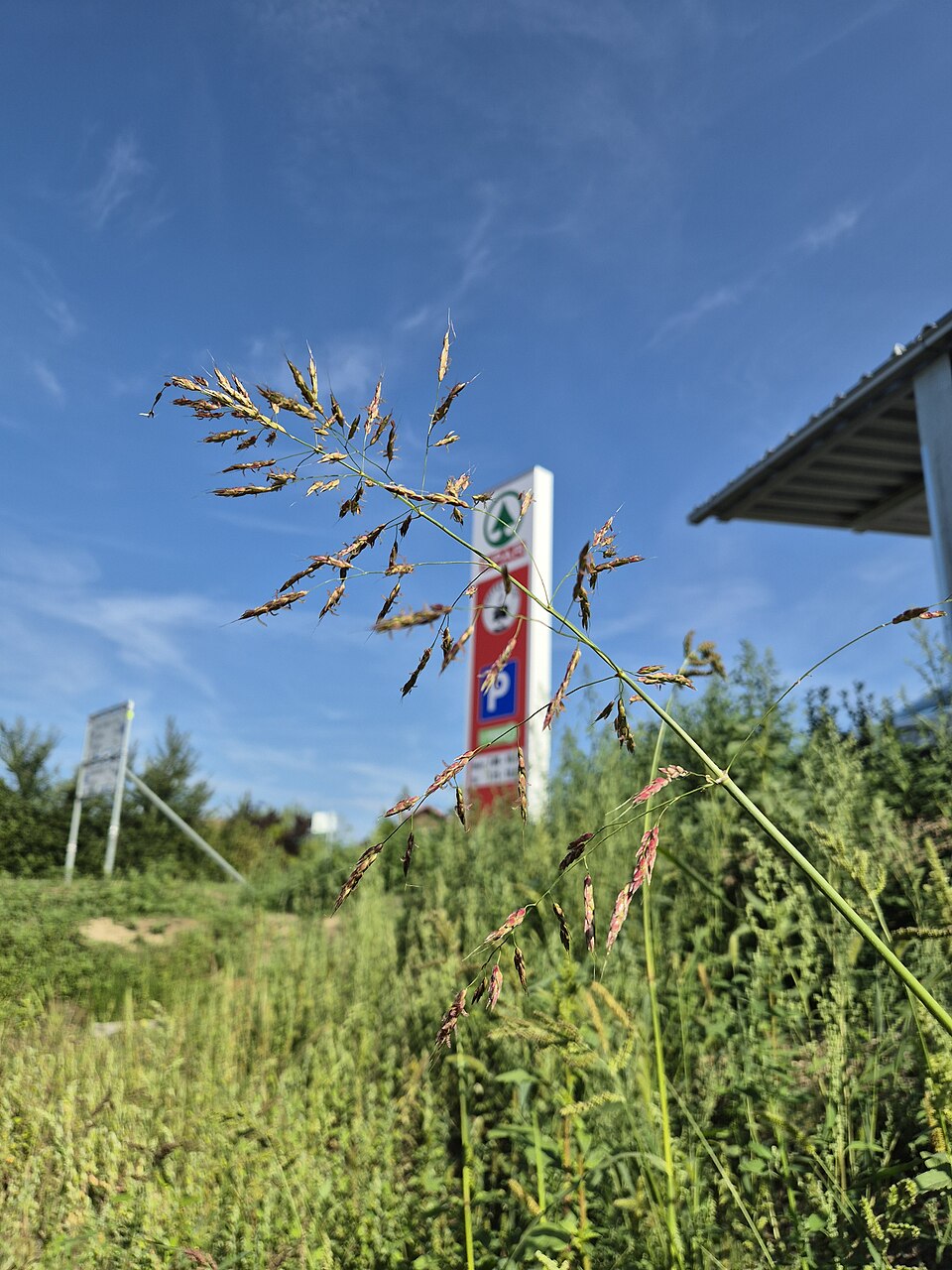



Why I take it out: it takes over field edges and road banks, and every little piece of its underground stems can sprout a new plant. Mowing now and then just spreads it4. Steady mowing slows it down, but it’s a long fight.
Quick facts
- Height: 3 to 8 ft, branching from the base4
- Spreads by: Thick underground stems (rhizomes); every piece can sprout. Also lots of seed, even in its first year4
- Where: Old fields, field edges, roadsides and forest openings. Spreads along roads by mowing4
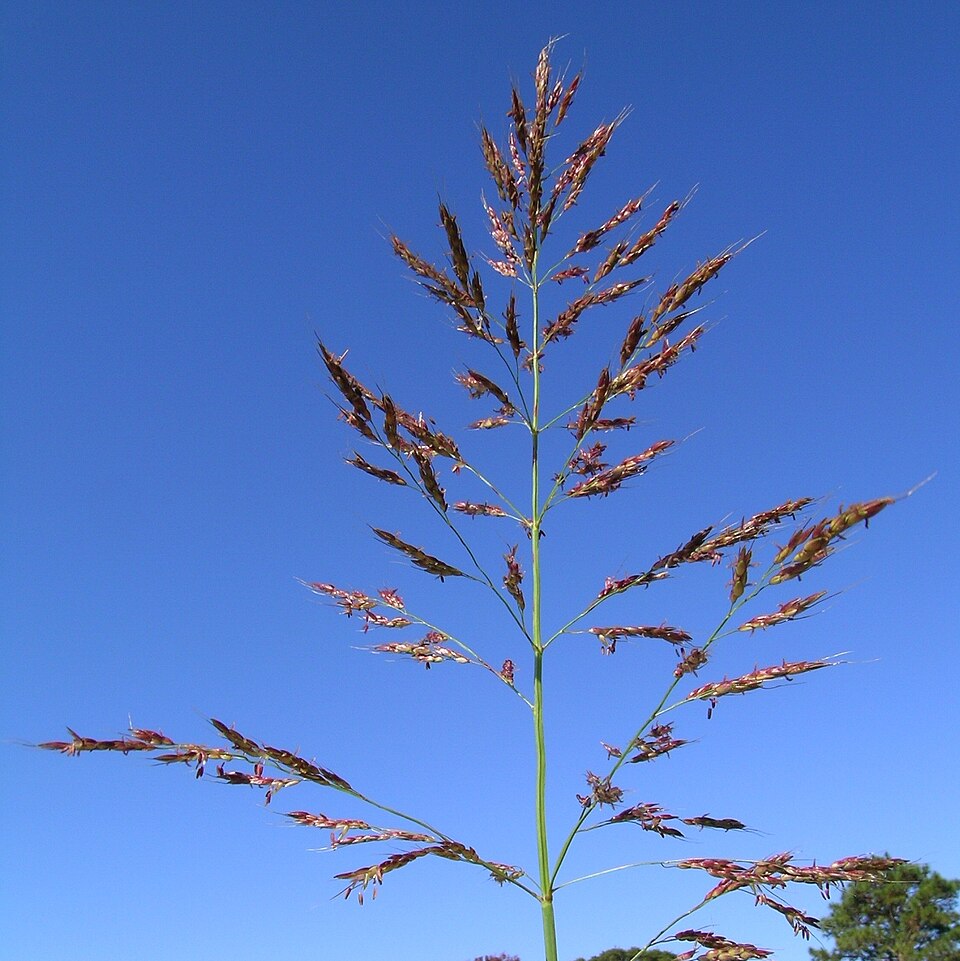
- Seed head: Big, airy, reddish to purplish, cone-shaped heads in midsummer; seeds ripen September and October4 1
- Toxic to livestock: Can poison grazing animals after frost, or when drought-stressed or fertilized4
How to tell it apart
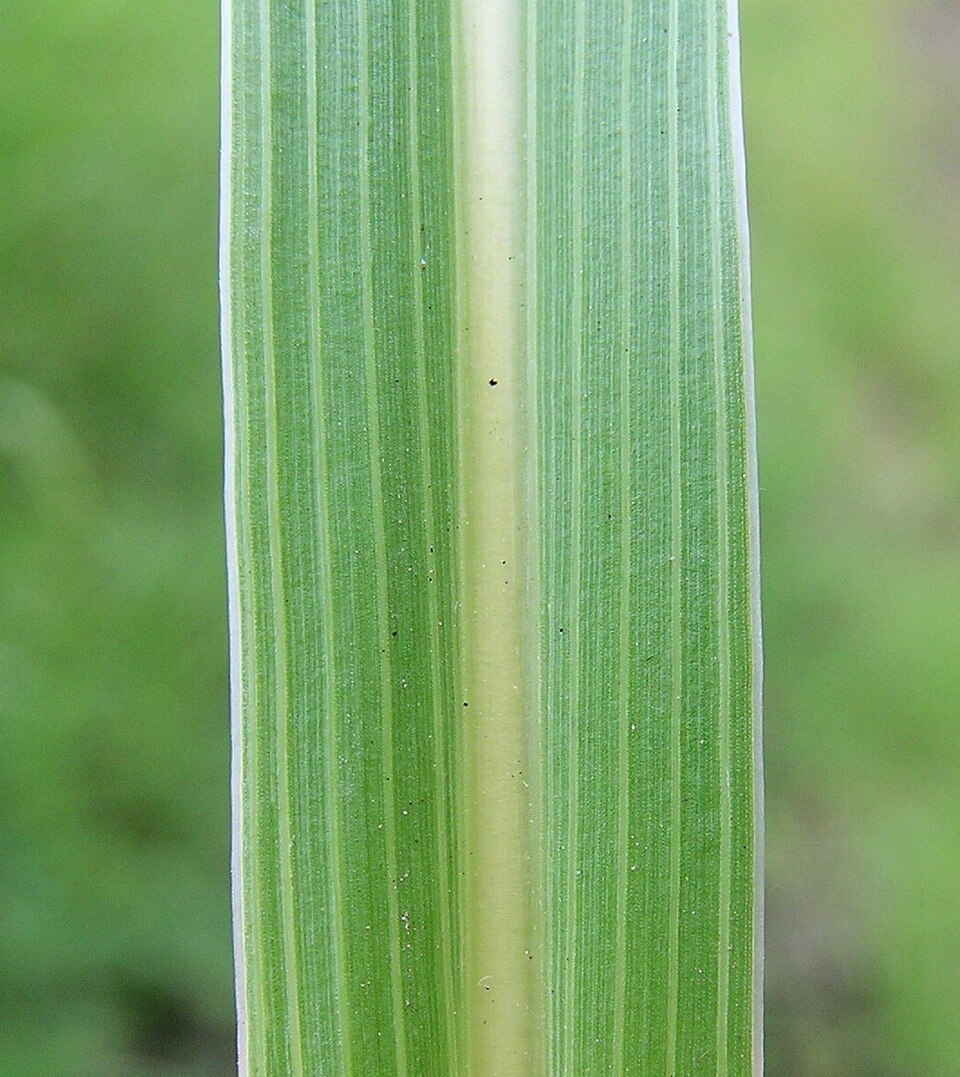
- Leaves: long and wide, like corn, up to 2 ft long and 1 to 3 in wide, with a prominent white midrib4 1.
- Stems: stout and round, in clumps that spread into dense colonies4.
- Native look-alike: purpletop (Tridens flavus) has only a thin whitish midvein, a reddish leaf base, and maroon seeds on drooping branches4.
Removal by season (how I do it)
- Spring, in moist soil: dig small patches with a shovel, getting the whole root wad5.
- All growing season: mow or cut close every 3 weeks, always before seed heads form6.
- Never: till it. Each piece of rhizome can sprout4.
- Several years: expect to slow it down, not wipe it out7.
- No chemicals for this one. Pulling, cutting and smothering, repeated, are how I handle it.
Plant this instead
Indian grass (Sorghastrum nutans), little bluestem (Schizachyrium scoparium) or eastern gamagrass (Tripsacum dactyloides). TN-IPC lists Indian grass and little bluestem as native swaps for invasive tall grasses8. Indian grass is on record in Roane County and little bluestem in Knox and Roane9 10 11.
Myth: “Mowing it will get rid of it.” Mowing now and then spreads it. It takes close mowing every 3 weeks to wear the roots down, and even that slows it more than it kills it4 6 7.
If you’d like more East Tennessee plant notes, join our email list and get a free East Tennessee invasives checklist.
Sources
- NC State Extension Plant Toolbox: Sorghum halepense
- TN-IPC invasive plant list (CSV)
- TN-KY Plant Atlas: Sorghum halepense
- USDA Forest Service, Miller et al., SRS-131
- TN-IPC, Johnsongrass (invasive plant page)
- Maryland Dept. of Agriculture, Johnsongrass identification and management
- Mississippi State Extension, Johnsongrass
- TN-IPC, Native Plant Alternatives (2016)
- TN-KY Plant Atlas: Sorghastrum nutans
- TN-KY Plant Atlas: Schizachyrium scoparium
- TN-KY Plant Atlas: Tripsacum dactyloides
Last checked Nov 26, 2026.