
Nandina domestica Thunb. · Barberry family (Berberidaceae) · Evergreen shrub from Asia1
Invasive in Tennessee · TN-IPC: Emerging2 · Found in Anderson and Knox counties3



Why I take it out: it’s in a lot of foundation plantings around here, and every part of it is poisonous. The berries can kill birds, and animals carry the seed into the woods1 4 5. Dig it out; cutting alone usually just brings resprouts6.
Quick facts
- Height: 3 to 8 ft1
- Width: 2 to 5 ft1
- Spreads by: Root sprouts, plus seeds that animals carry off5
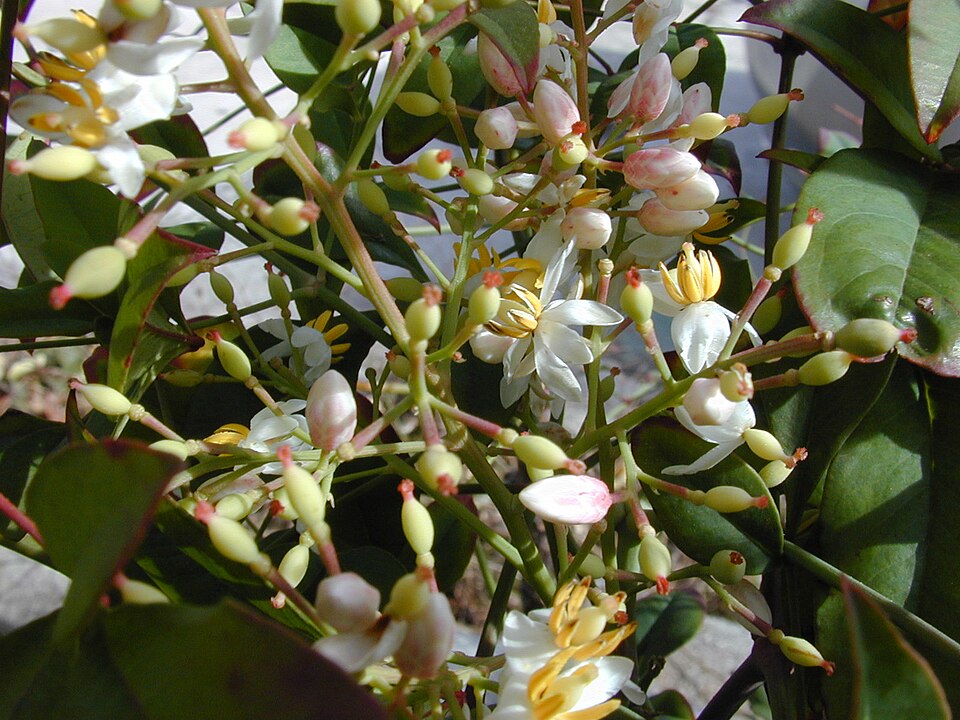
- Blooms: Upright clusters of small white flowers in late spring to early summer1 5
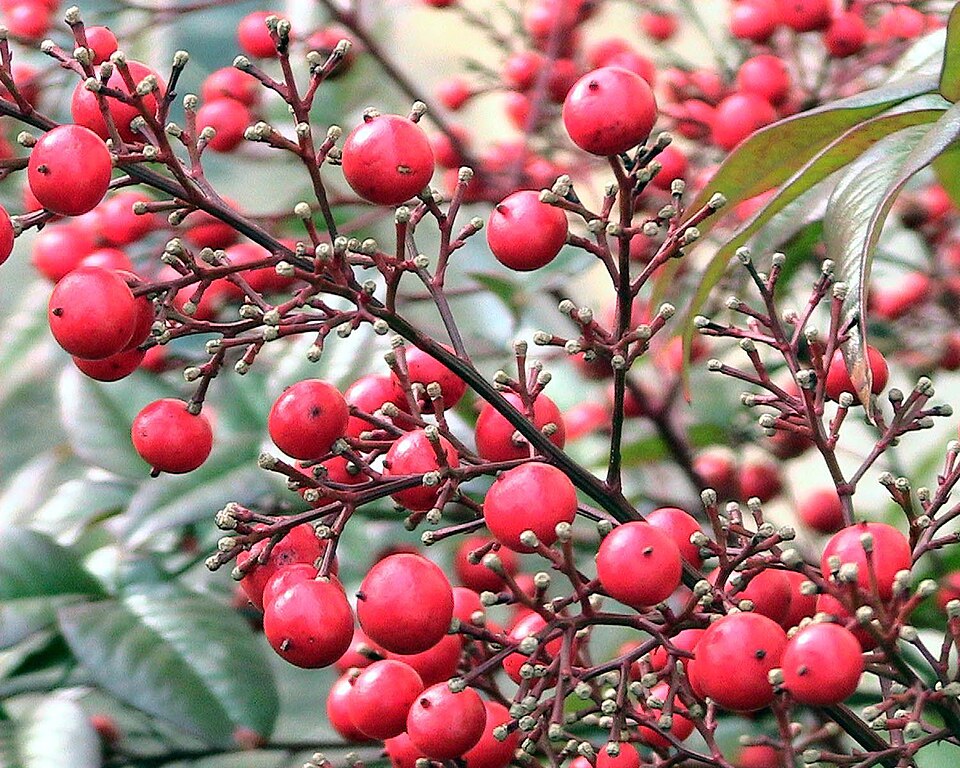
- Berries: Bright red berry clusters from fall through winter1 5
- Toxic: All parts contain cyanide-forming compounds. Toxic to dogs, cats and horses7 1, and linked to cedar waxwing deaths4
How to tell it apart
- Stems: several upright, cane-like stems that look a bit like bamboo5.
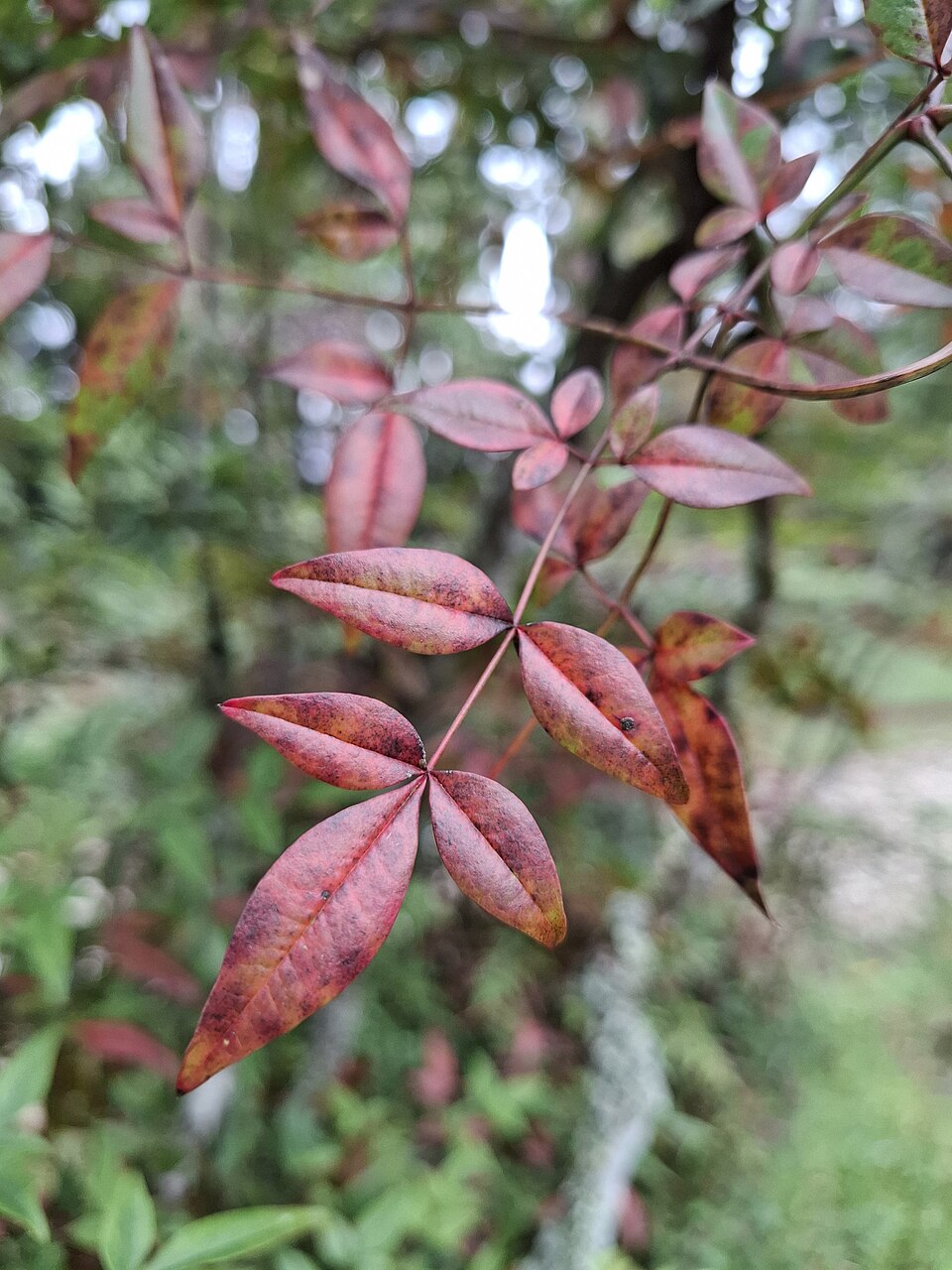
- Leaves: lacy, divided two or three times into small pointed leaflets; red to bronze in spring and often red-tinged in winter1 5.
- Winter: it stays green, with red berry clusters hanging on1.
How big it gets
Height 3–8 ft · Width 2–5 ft1. The pale shape is the high end; red dashes mark 3 and 8 ft. The dark shape is a young plant, for comparison only. The woman is 5 ft 4 in tall and the child about 3 ft 6 in.
Removal by season (how I do it)
- When the soil is moist: dig out the whole clump, crown and roots. Pull seedlings and weed-wrench bigger plants5 6 8.
- As sprouts appear: dig them too. Cutting alone is likely to bring resprouts6 8.
- Late summer to fall: cut off berry clusters before they ripen red, and bag them5 6.
- Afterward: keep pulling sprouts and seedlings until the plant stops coming back6.
- Last resort, only for a clump too big to dig: if a stump keeps resprouting, ask me before treating it. I never spray. The full steps are in my free checklist.
Plant this instead
Yellowroot (Xanthorhiza simplicissima), winterberry (Ilex verticillata; plant a male nearby for berries) or American beautyberry (Callicarpa americana). All three are East Tennessee natives: yellowroot is on record in Roane County, winterberry in Knox, and beautyberry in Anderson and Knox9 10 11.
Myth: “It’s not a real bamboo, so it won’t spread.” It isn’t bamboo, but it spreads by root sprouts and by birds and other animals carrying the seed5.
If you’d like more East Tennessee plant notes, join our email list and get a free East Tennessee invasives checklist.
Sources
- NC State Extension Plant Toolbox: Nandina domestica
- TN-IPC invasive plant list (CSV)
- TN-KY Plant Atlas
- Woldemeskel & Styer (UGA), Vet Med Int 2010: nandina in cedar waxwings
- USDA Forest Service, Miller et al., SRS-131
- Alabama Extension, Nandina: Attractive Yet Problematic
- ASPCA Animal Poison Control: Nandina
- UF/IFAS, Invasive Plant Guide for Homeowners: Nandina
- TN-KY Plant Atlas: Xanthorhiza simplicissima
- TN-KY Plant Atlas: Ilex verticillata
- TN-KY Plant Atlas: Callicarpa americana
Last checked Nov 26, 2026.