
Wisteria sinensis (Sims) DC. and W. floribunda (Willd.) DC. · Pea family (Fabaceae) · Woody climbing vines from China and Japan1 2
Invasive in Tennessee · TN-IPC: Established3 · Chinese found in Roane, Japanese in Knox County4
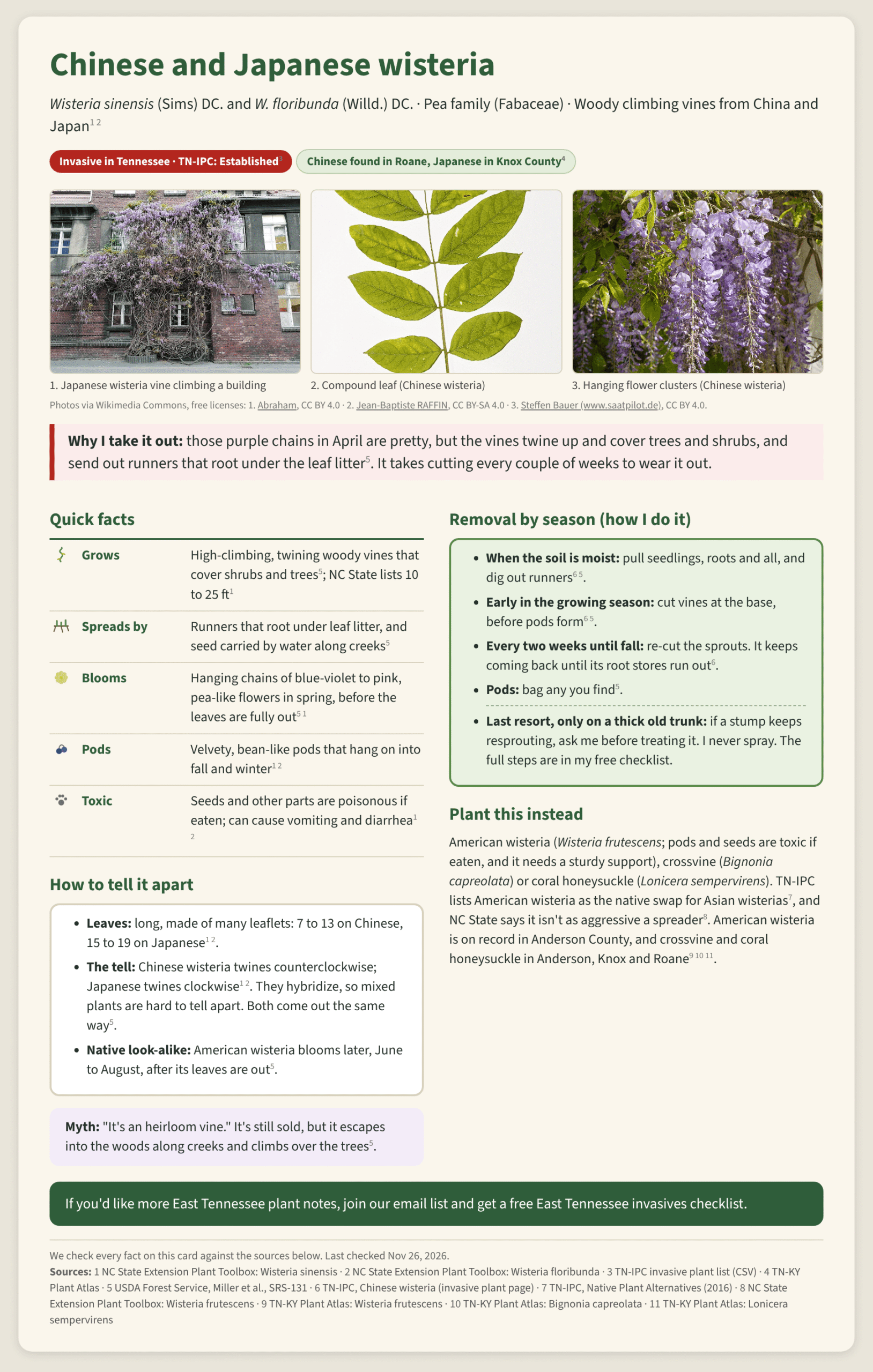




Why I take it out: those purple chains in April are pretty, but the vines twine up and cover trees and shrubs, and send out runners that root under the leaf litter5. It takes cutting every couple of weeks to wear it out.
Quick facts
- Grows: High-climbing, twining woody vines that cover shrubs and trees5; NC State lists 10 to 25 ft1
- Spreads by: Runners that root under leaf litter, and seed carried by water along creeks5
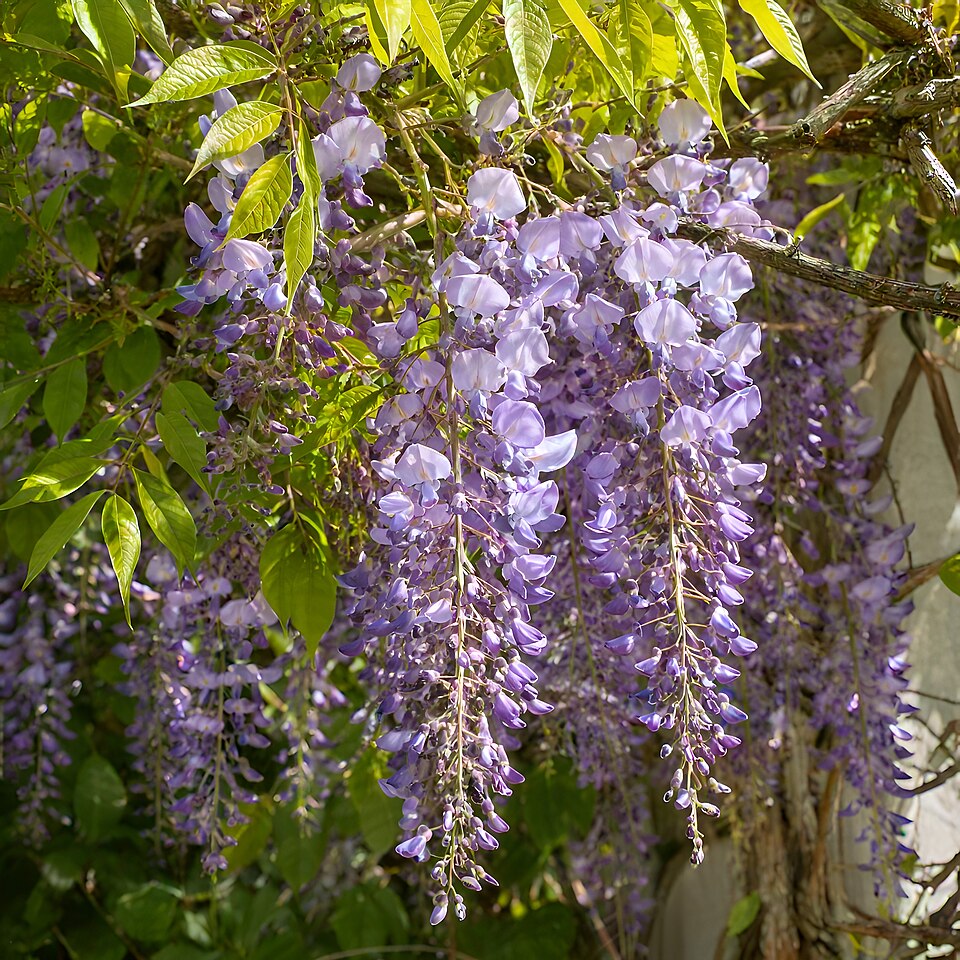
- Blooms: Hanging chains of blue-violet to pink, pea-like flowers in spring, before the leaves are fully out5 1
- Pods: Velvety, bean-like pods that hang on into fall and winter1 2
- Toxic: Seeds and other parts are poisonous if eaten; can cause vomiting and diarrhea1 2
How to tell it apart
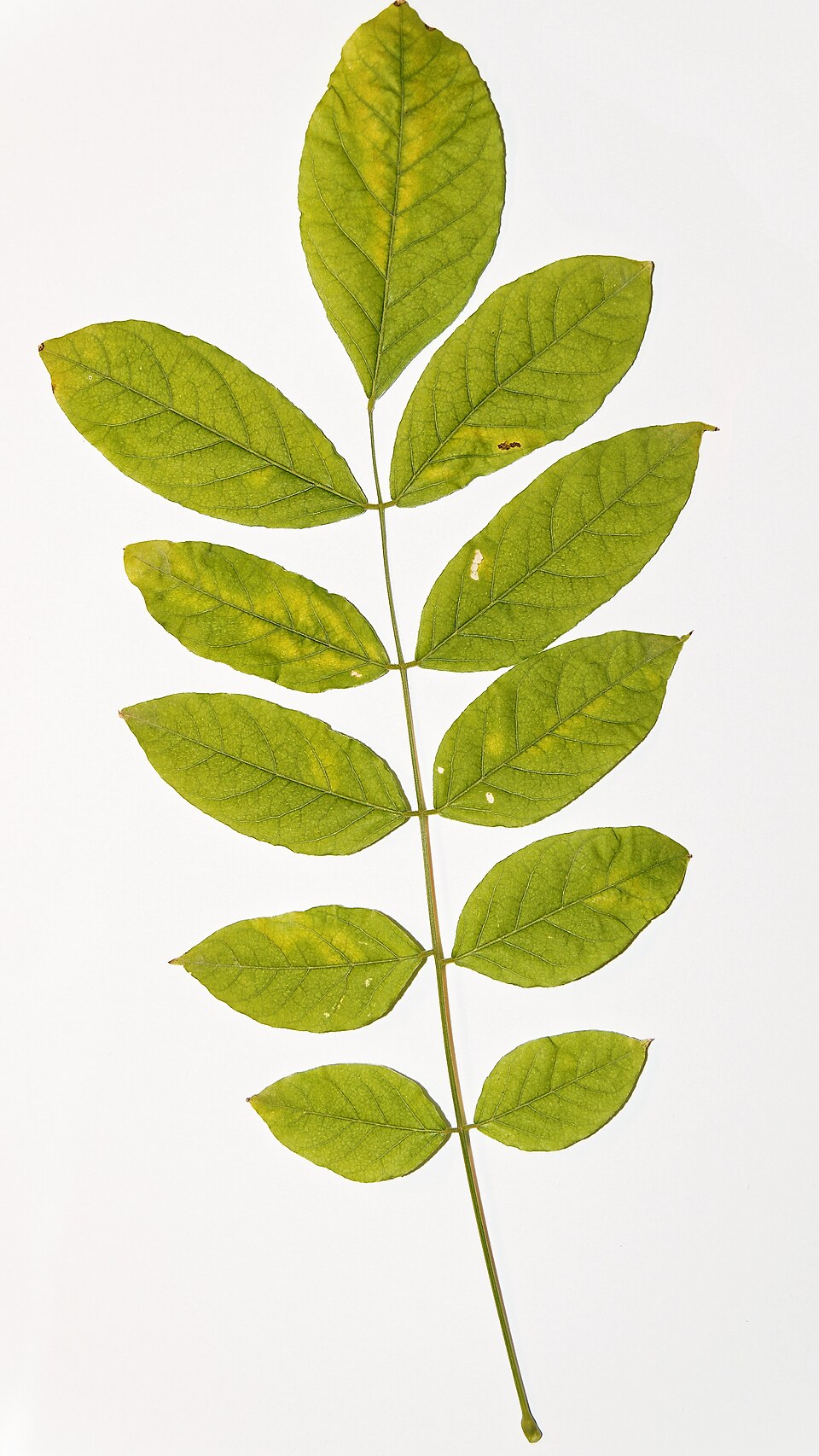
- Leaves: long, made of many leaflets: 7 to 13 on Chinese, 15 to 19 on Japanese1 2.
- The tell: Chinese wisteria twines counterclockwise; Japanese twines clockwise1 2. They hybridize, so mixed plants are hard to tell apart. Both come out the same way5.
- Native look-alike: American wisteria blooms later, June to August, after its leaves are out5.
Removal by season (how I do it)
- When the soil is moist: pull seedlings, roots and all, and dig out runners6 5.
- Early in the growing season: cut vines at the base, before pods form6 5.
- Every two weeks until fall: re-cut the sprouts. It keeps coming back until its root stores run out6.
- Pods: bag any you find5.
- Last resort, only on a thick old trunk: if a stump keeps resprouting, ask me before treating it. I never spray. The full steps are in my free checklist.
Plant this instead
American wisteria (Wisteria frutescens; pods and seeds are toxic if eaten, and it needs a sturdy support), crossvine (Bignonia capreolata) or coral honeysuckle (Lonicera sempervirens). TN-IPC lists American wisteria as the native swap for Asian wisterias7, and NC State says it isn’t as aggressive a spreader8. American wisteria is on record in Anderson County, and crossvine and coral honeysuckle in Anderson, Knox and Roane9 10 11.
Myth: “It’s an heirloom vine.” It’s still sold, but it escapes into the woods along creeks and climbs over the trees5.
If you’d like more East Tennessee plant notes, join our email list and get a free East Tennessee invasives checklist.
Sources
- NC State Extension Plant Toolbox: Wisteria sinensis
- NC State Extension Plant Toolbox: Wisteria floribunda
- TN-IPC invasive plant list (CSV)
- TN-KY Plant Atlas
- USDA Forest Service, Miller et al., SRS-131
- TN-IPC, Chinese wisteria (invasive plant page)
- TN-IPC, Native Plant Alternatives (2016)
- NC State Extension Plant Toolbox: Wisteria frutescens
- TN-KY Plant Atlas: Wisteria frutescens
- TN-KY Plant Atlas: Bignonia capreolata
- TN-KY Plant Atlas: Lonicera sempervirens
Last checked Nov 26, 2026.