
Pollinator Plants for East Tennessee Yards
If you want more bees, butterflies and moths in your yard, start with what you plant. It’s one of the biggest things you control. Here’s my short list of native pollinator plants that do well around Oak Ridge and Knoxville, with something in bloom from early spring to late fall. I’ve added the caterpillar plants too, plus the cleanup habits and no-spray basics that help a small yard feed a lot of life.
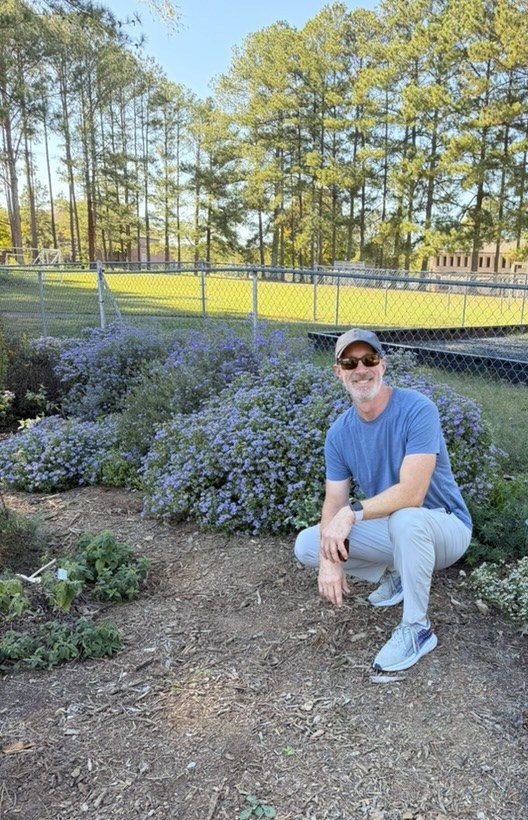
Why native plants feed pollinators better
A lot of our native insects are picky eaters. Some can only eat a few plants.
Take bees. Some native bees collect pollen from just one group of plants, and researchers call them specialist bees. Goldenrods feed 42 specialist bee species across our part of the eastern forests, according to the National Wildlife Federation’s list for our ecoregion. Jarrod Fowler’s list of pollen specialist bees of the eastern US shows 33 that depend on asters and 28 on black-eyed Susans and their relatives. Even redbud feeds one. The southeastern blueberry bee, a specialist best known on blueberries, also uses redbud pollen. These bees feed their young pollen from one plant group. When those plants disappear, they can’t easily switch to something else (Fowler).
Caterpillars are even pickier. A monarch caterpillar eats milkweed. A zebra swallowtail caterpillar eats pawpaw, the only host plant listed for it by the Tennessee Valley chapter of the North American Butterfly Association. The National Wildlife Federation counts 436 kinds of caterpillars on oaks across our part of the eastern forests. That count covers all oaks over a big region, not one tree. Still, it shows how much one group of native plants can carry. Nearly all our land birds, about 96%, feed their babies insects, mostly caterpillars (Audubon; NWF).
Many popular garden plants aren’t native here, and research shows they feed far fewer of our insects. In one study of suburban yards, properties planted with natives had significantly more caterpillars and caterpillar species, and more breeding birds, than yards with the usual non-native shrubs and groundcovers (Burghardt et al. 2009). In another study, Carolina chickadees in yards dominated by non-native plants found fewer insects and raised fewer young. Their numbers only held steady in yards where more than 70% of the plant mass was native (Narango et al. 2018). A flower can look pretty and still feed very few of the bees and caterpillars that live here.
That’s why, when I help someone start a pollinator garden, I begin with East Tennessee native plants. They feed the insects that live here.
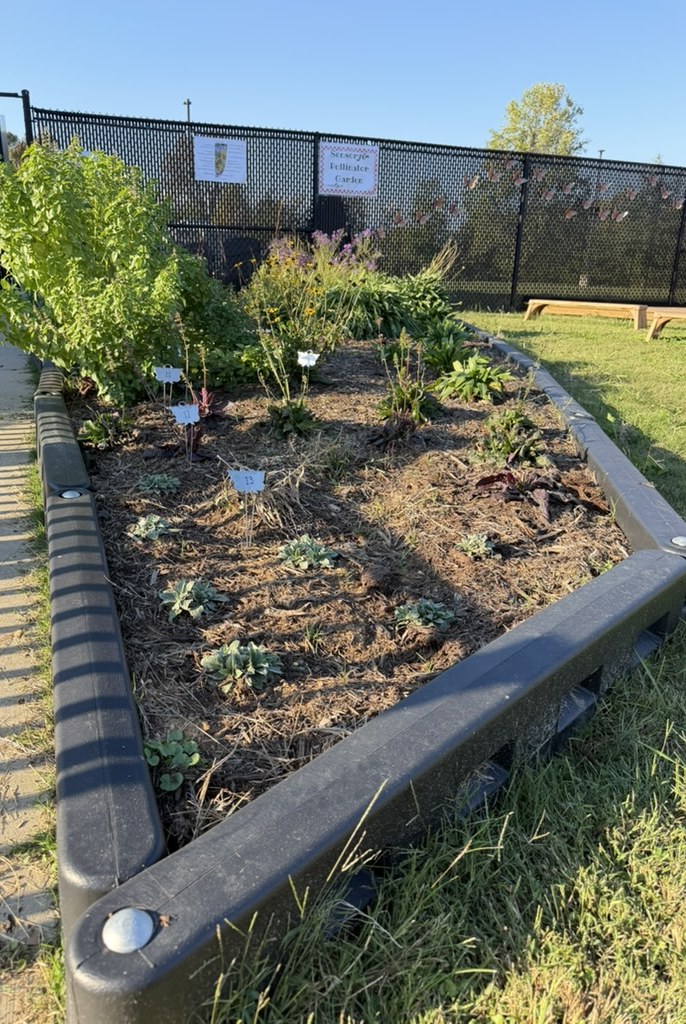
Native wildflowers, shrubs and small trees by season
Here are 18 native plants for bees and butterflies, six for each season. Each one has county records in East Tennessee in the Tennessee-Kentucky Plant Atlas, and none is on the state’s rare plant list.
A few notes on the tables:
- Bloom times are given by season. The source months cover each plant’s whole range, so your timing in East Tennessee may run a little earlier or later.
- “Eastern US specialist bees” come from Fowler’s list, which covers the eastern states. It tells you which bees depend on a plant. It doesn’t tell you which ones are in your yard.
- The goldenrod count of 42 comes from the National Wildlife Federation’s list for our ecoregion, the eastern temperate forests. That list covers a different area than Fowler’s, so its numbers don’t always match his (NWF).
- Where a plant spreads or gets big, I’ve said so. Some of these are better for a meadow corner than a tidy bed.
Spring bloom
| Plant | Sun | Soil and moisture | What it feeds | Sources |
|---|---|---|---|---|
| Eastern redbud, Cercis canadensis (small tree) | Sun to part shade (a little afternoon shade helps in hot summers) | Moist, well-drained; avoid wet spots | Early spring nectar for native bees and bumble bees. Leafcutter bees cut its leaves for their nests. The southeastern blueberry bee (Habropoda laboriosa), an eastern US specialist, uses redbud. | Atlas · LBJWC · Xerces SE · Fowler · NCSU · MBG |
| Serviceberry, Amelanchier arborea (small tree) | Sun to shade | Moist, well-drained, acid soil; also listed for dry sites | Spring flowers of special value to native bees. | Atlas · LBJWC |
| Highbush blueberry, Vaccinium corymbosum (shrub) | Sun to shade | Acid soil; dry to wet | Feeds the southeastern blueberry bee, mining bees and bumble bees. Several eastern US specialist bees depend on it. | Atlas · LBJWC · Xerces SE · Fowler |
| Wild columbine, Aquilegia canadensis | Part shade to shade | Dry to moist, well-drained, not too rich | Hummingbirds, bees, butterflies and hawk moths visit the blooms. | Atlas · LBJWC |
| Golden alexanders, Zizia aurea | Sun to part shade | Moist | Special value to native bees, with its own eastern US specialist (Andrena ziziae). Draws small beneficial wasps and flies, and hosts black swallowtail caterpillars. Native, but less common in our area. | Atlas · LBJWC · Xerces SE · Fowler |
| Wild geranium, Geranium maculatum | Part shade to shade | Moist, rich, acid | Native bees and bumble bees, plus an eastern US specialist (Andrena distans). Spreads by rhizomes but isn’t aggressive. | Atlas · LBJWC · Fowler |
Summer bloom
| Plant | Sun | Soil and moisture | What it feeds | Sources |
|---|---|---|---|---|
| Butterfly weed, Asclepias tuberosa | Sun | Dry to moist, well-drained; drought tolerant | Monarch host and a strong nectar plant for native bees, bumble bees, butterflies and hummingbirds. | Atlas · LBJWC · Xerces SE |
| Purple coneflower, Echinacea purpurea | Sun to part shade | Dry, well-drained | Native bees, bumble bees, butterflies and hummingbirds. Buy the straight species. It can spread, and it’s native but found in fewer East Tennessee counties. | Atlas · LBJWC · Xerces SE 2023 |
| Wild bergamot, Monarda fistulosa | Sun to part shade | Dry to moist; most soils | Midsummer food for bees, butterflies, moths and hummingbirds, with eastern US specialist bees of its own. Spreads by roots, so divide it every few years. | Atlas · LBJWC · Xerces SE · Fowler |
| Slender mountain mint, Pycnanthemum tenuifolium | Sun to part shade | Dry to moist | Busy with bees, wasps, flies and small blue and copper butterflies. | Atlas · LBJWC · Xerces SE |
| Black-eyed Susan, Rudbeckia hirta | Sun | Dry to moist, well-drained | Nectar for bees and seed for birds, from summer into fall. Its plant group feeds 28 eastern US specialist bees. Short-lived, and can spread in perfect conditions. | Atlas · LBJWC · Xerces SE · Fowler |
| Buttonbush, Cephalanthus occidentalis (shrub) | Sun to part shade | Moist to wet; good for wet spots and rain gardens, not for dry soil | A midsummer butterfly magnet that also hosts many butterflies and moths and feeds bees. Needs a wet site and gets big (5 to 12 feet). | Atlas · LBJWC · Xerces SE · UT · NCSU |
Fall bloom
| Plant | Sun | Soil and moisture | What it feeds | Sources |
|---|---|---|---|---|
| New England aster, Symphyotrichum novae-angliae | Full sun (takes a little shade) | Average to moist; most soils, including clay | Late summer into fall nectar for bees and monarchs, and host to the pearl crescent butterfly. Asters feed 33 eastern US specialist bees. Can be aggressive. | Atlas · LBJWC · Fowler · UT · NCSU |
| Aromatic aster, Symphyotrichum oblongifolium | Sun to part shade | Dry to moist, well-drained | One of the latest bloomers on this list, into November, with special value to native bees. Spreads slowly, so thin it now and then. | Atlas · LBJWC · Fowler |
| Showy goldenrod, Solidago speciosa | Full sun | Average to dry, well-drained; handles poor, rocky or clay soil | Goldenrods feed a huge range of bees, butterflies, moths, wasps and flies, and fuel monarchs migrating in fall. Spreads by rhizomes and seed, more so in moist, rich soil. | Atlas · LBJWC · Xerces SE · Fowler · UT · NCSU |
| Blue-stem goldenrod, Solidago caesia | Sun to part shade; one of the few goldenrods that grows well in light shade | Average, well-drained soil, medium to dry; handles clay or rocky soil | Native bees and honey bees, and goldenrods as a group feed 42 specialist bee species in our region. Small, clump-forming and not aggressive, and it handles light shade, so it suits a small yard. | Atlas · LBJWC · NWF · UT · MBG |
| Blue mistflower, Conoclinium coelestinum | Sun to part shade | Moist loam, sand or clay | Bees and butterflies from late summer into fall. Spreads fast, so use it as a groundcover, not in a neat bed. | Atlas · LBJWC |
| Giant ironweed, Vernonia gigantea | Sun to shade | Moist, rich soil | Butterflies and bees, including an eastern US specialist longhorn bee (Melissodes denticulatus). Very tall, 3 to 12 feet. | Atlas · LBJWC · Xerces SE · Fowler |
Source key: Atlas = Tennessee-Kentucky Plant Atlas. LBJWC = Lady Bird Johnson Wildflower Center. Xerces SE = Xerces Society Southeast pollinator plant list. Fowler = Jarrod Fowler, Pollen Specialist Bees of the Eastern United States. NWF = National Wildlife Federation, Keystone Native Plants list for Ecoregion 8 (Eastern Temperate Forests). UT = UT Extension Tennessee Yards (tnyards.utk.edu). NCSU = NC State Extension Gardener Plant Toolbox (plants.ces.ncsu.edu). MBG = Missouri Botanical Garden Plant Finder.
Butterfly host plants: food for caterpillars
Flowers feed adult butterflies. Host plants feed their caterpillars, and without them you won’t get the next generation. These are the butterfly host plants I’d think about first.
Milkweed for monarchs. Monarch caterpillars depend on milkweeds (Asclepias). They’ll nibble a few related vines, but those are poor food. Plant true milkweeds (USFS; Greenstein et al. 2022; BAMONA). The Tennessee Valley butterfly chapter lists 14 native milkweeds as monarch hosts in its area (TN Valley NABA). Here are four that grow wild in East Tennessee:
- Butterfly weed (Asclepias tuberosa) for sunny, dry, well-drained spots. It’s the easiest fit for a small yard (LBJWC).
- Swamp milkweed (A. incarnata) for wet spots and rain gardens. It handles mucky clay and also hosts the queen butterfly (LBJWC).
- Common milkweed (A. syriaca) for meadows and bigger spaces. It spreads by roots into large patches, so it’s a poor fit for a small bed (LBJWC).
- Whorled milkweed (A. verticillata), also on the chapter’s monarch host list (TN Valley NABA).
Please skip tropical milkweed (Asclepias curassavica), even though many nurseries sell it (Xerces Milkweed FAQ). It isn’t native here (USDA PLANTS), and the Xerces Society advises against planting it even when native milkweed is hard to find (Xerces Milkweed FAQ). Where it keeps its leaves through winter, a monarch parasite can build up on it, and it can throw off the monarch migration (Xerces). I’d skip butterfly bush (Buddleja davidii) too. It isn’t native, and the Tennessee Invasive Plant Council lists it as an emerging invasive (TN-IPC). For a native shrub butterflies love, try buttonbush instead (TN-IPC alternatives).
Other host plant pairs (TN Valley NABA, swallowtails; TN Valley NABA, brush-foots; Xerces SE):
- Pawpaw (Asimina triloba) feeds zebra swallowtail caterpillars.
- Spicebush (Lindera benzoin) and sassafras (Sassafras albidum) feed spicebush swallowtails. Tulip poplar is also listed.
- Violets, like common blue violet (Viola sororia), feed great spangled and meadow fritillaries. That’s a good reason to leave the violets in your lawn.
- Golden alexanders (Zizia aurea) feed black swallowtails.
- Maypop, our native passionflower vine (Passiflora incarnata), feeds Gulf and variegated fritillaries. Fair warning, it sends up shoots from its roots and can cover a lot of ground (NCSU).
- Oaks, like white oak (Quercus alba), top the National Wildlife Federation’s list for our region, with 436 kinds of caterpillars across the genus (NWF).
Leave the leaves and stems
A pollinator garden doesn’t shut down in winter. A lot of what lives there is just hiding. According to the Xerces Society’s Leave the Leaves guide:
- Great spangled fritillary and woolly bear caterpillars shelter in leaf piles.
- Red-banded hairstreaks lay eggs on fallen oak leaves.
- Luna moths and swallowtails hide their cocoons and chrysalises as dried leaves.
- Bumble bees dig only an inch or two into the ground to spend the winter, so a thick layer of leaves helps them.
Firefly larvae live in leaf litter too, and they can spend up to two years as larvae (Xerces).
Stems count too. About 30% of native bees nest in tunnels, like leafcutter and mason bees (Xerces, Leave the Leaves). Small carpenter bees carve nests in last year’s dead wildflower stems, and yellow-faced bees use the hollow centers of smaller stems like bee balm (Xerces, Save the Stems).
Here’s what I do:
- Rake leaves into beds and under trees instead of bagging them. I don’t shred them, because whole leaves protect what’s inside.
- Leave dead flower stalks standing over winter.
- In spring, once temperatures are reliably in the 50s, cut stalks back to 12 to 24 inches. That’s inside the 8 to 24 inch range Xerces suggests. Do it in early spring, not late winter.
- Leave the stubble standing. Bees nest in the cut stems, their young spend the winter inside, and new growth hides it fast (Xerces, Save the Stems).
Simple no-spray tips
One of the simplest ways to protect pollinators is to stop spraying. I don’t spray. The only time I use a chemical is as a last resort on a woody invasive, painted on a cut stump, or put into cuts in the trunk of a big tree-of-heaven.
- Ask how your plants were grown. Some nursery plants are treated with neonicotinoids. The plant absorbs them, and they can show up in its pollen and nectar, harming bees even if they were applied weeks before bloom (Xerces). A UK study found them in more than 70% of 29 garden-centre plants sold as “bee-friendly” (Lentola et al. 2017).
- Don’t trust the tag alone. No legal or industry standard defines “pollinator-friendly” on a plant tag (Xerces). Ask the nursery, and choose the straight species when you can.
- Think twice about mosquito barrier sprays. In one study of yards treated with hired barrier sprays, researchers estimated that a honey bee sprayed directly would get, on average, more than six times the LD50, the dose that kills half of exposed honey bees. Spray also drifted into unsprayed yards next door (Stacks Journal, 2025).
- Dump standing water instead. Xerces says that getting rid of standing water works better over time than spraying for adult mosquitoes (Xerces).
- Leave tall stems standing. Leaving tall stems standing longer supports stem-nesting bees. Dragonflies eat mosquitoes, and many hunt from perches on plants.
For more on choosing healthy plants, see my post Buying Native Plants in East Tennessee: What to Check.
How to start
You don’t have to redo your whole yard. Here’s how I’d begin:
- Find your sun and your wet spots. Note what gets full sun, what’s shady, and where water sits after rain. That tells you which rows of the tables to read.
- Pick one plant per season. A redbud or serviceberry for spring, butterfly weed or mountain mint for summer, an aster or blue-stem goldenrod for fall. You want something in bloom from early spring to late fall (USFS).
- Add one host plant. A milkweed is a good first choice, since monarch caterpillars depend on it (USFS).
- Plant in clumps. Several of the same plant together are easier for pollinators to find than single plants (USFS).
- Leave the leaves this fall and skip the sprays.
Start small, watch who shows up, and add from there.
Want help with your yard?
If you’d like a free East Tennessee invasives checklist and a note from me each season about what to plant and when, join the email list.
And if you’re in Oak Ridge, Anderson County or west Knox County and you’d like me to walk your yard with you, I offer an in-person consult where we’ll walk your yard together and look at your sun, soil and wet spots. Learn about the in-person consult.
Questions? Email me at info@nurtured.earth.